William Camargo: All That I Can Carry
April 11 - May 30, 2026
Opening Reception & Book Signing: Saturday, April 11, 3:00 - 5:00 PM
Hannah Sloan Curatorial & Advisory
5613 San Vicente Boulevard, Los Angeles, CA 90019
Press Release
Hannah Sloan Curatorial & Advisory (HSC&A) is pleased to present All That I Can Carry, a solo presentation of photographs by Southern California–based artist William Camargo, on view April 11–May 30, 2026 at HSC&A in Los Angeles. A reception for the artist and book signing will be held Saturday, April 11 from 3–5 PM.
This exhibition brings together several interconnected series developed across Camargo’s practice, including new works created during his time in San José, Costa Rica where he served as the inaugural artist-in-residence at satis.FACTORY Casa de Arte, a month-long residency program supported by HSC&A.
Working in the tradition of conceptual photography, artist and educator William Camargo explores how gentrification, systemic racism, and the erasure of Chicanx and Latine communities shape cities and the lives of those who inhabit them. Through photography, installation, and community archiving, he constructs counter-narratives that center the experiences of Brown communities and bring overlooked histories into public view. Camargo is especially known for inventive works that challenge entrenched power structures while blending conceptual photographic strategies with a sharp sense of humor and political bravado.
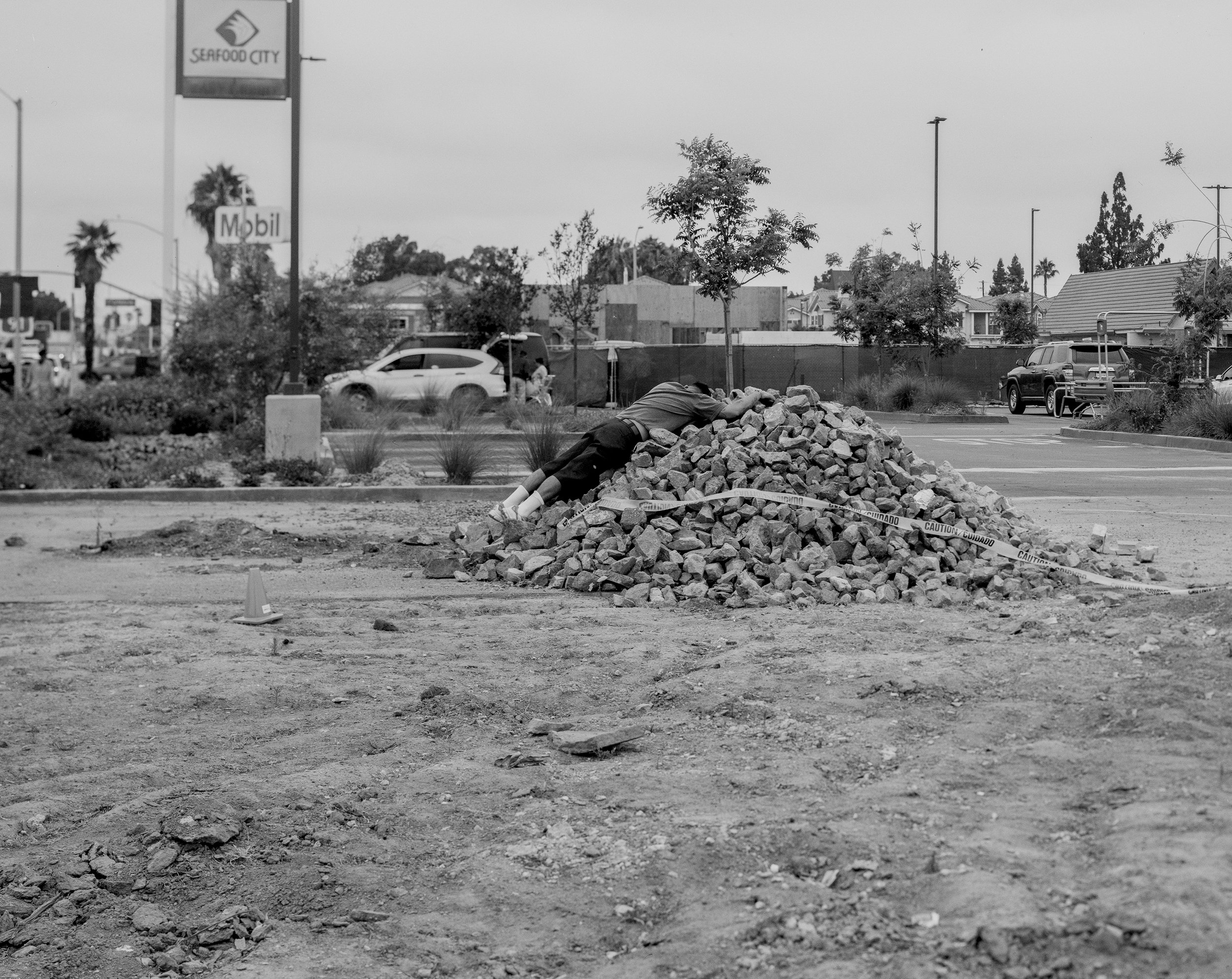
During his 2025 residency in San José, Costa Rica, Camargo addressed the issue of gentrification through a series of performative actions staged within the urban landscape. While walking the city, the artist encountered graffiti reading “No + Torres + Parques” (translating to “No More Towers, More Parks”), a phrase used by residents protesting rapid development and displacement—specifically the recent surge of high-rise luxury apartments. These encounters informed his “body interventions,” which explore the relationship between urban expansion and community resistance, a concern that resonates across many cities facing accelerating redevelopment.
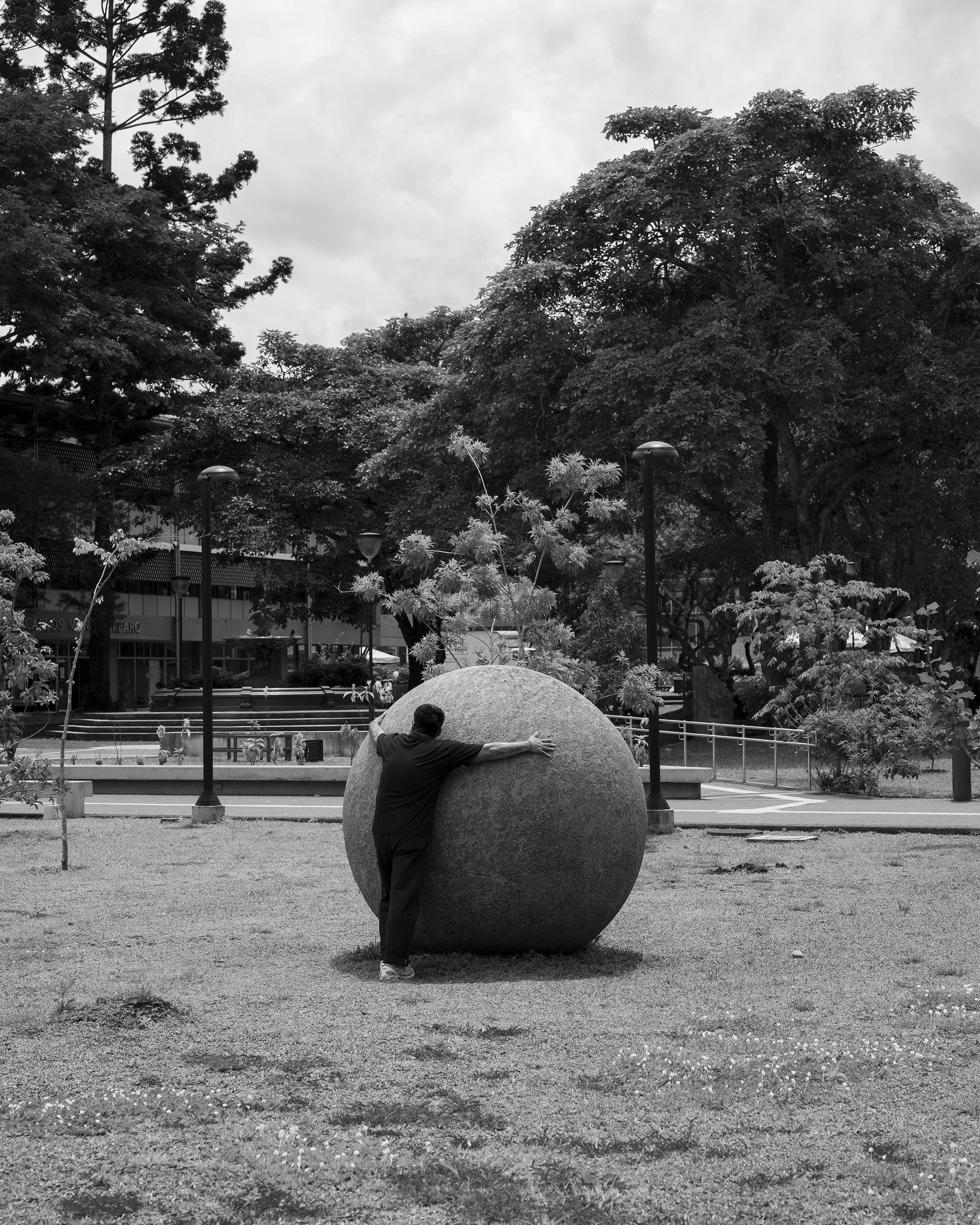
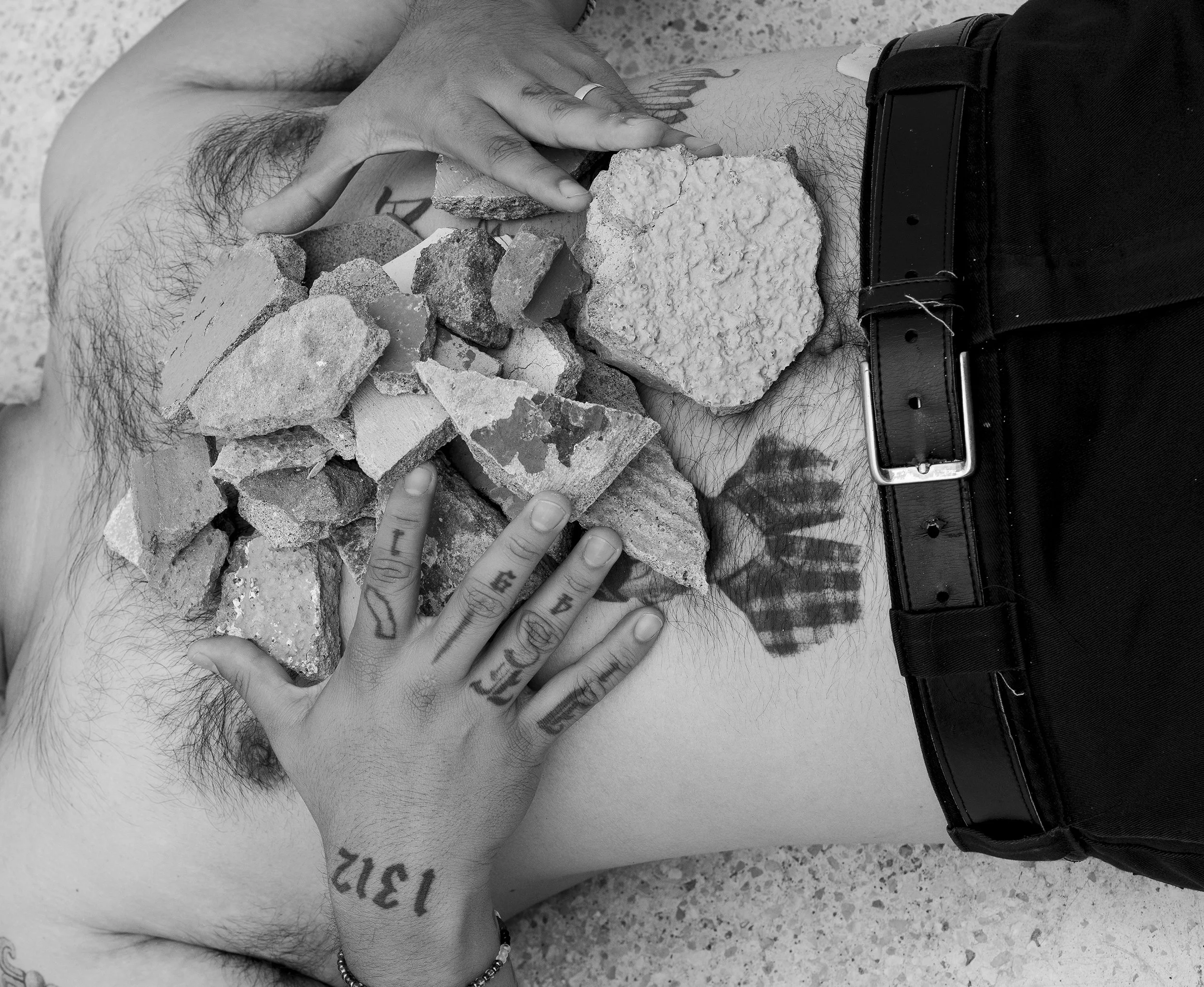
Two works from this series highlight Camargo’s embodied approach. In Brown Body Pyramid, rubble gathered from a local construction site is arranged atop the artist’s bare torso, evoking both archaeological structures and the material traces of redevelopment. In Body Intervention #2, the artist leans, arms outstretched, against one of Costa Rica’s iconic pre-Columbian, pre-conquest stone spheres, placing himself in dialogue with an archaeological past while connecting historical and contemporary processes of land use, labor, and displacement.
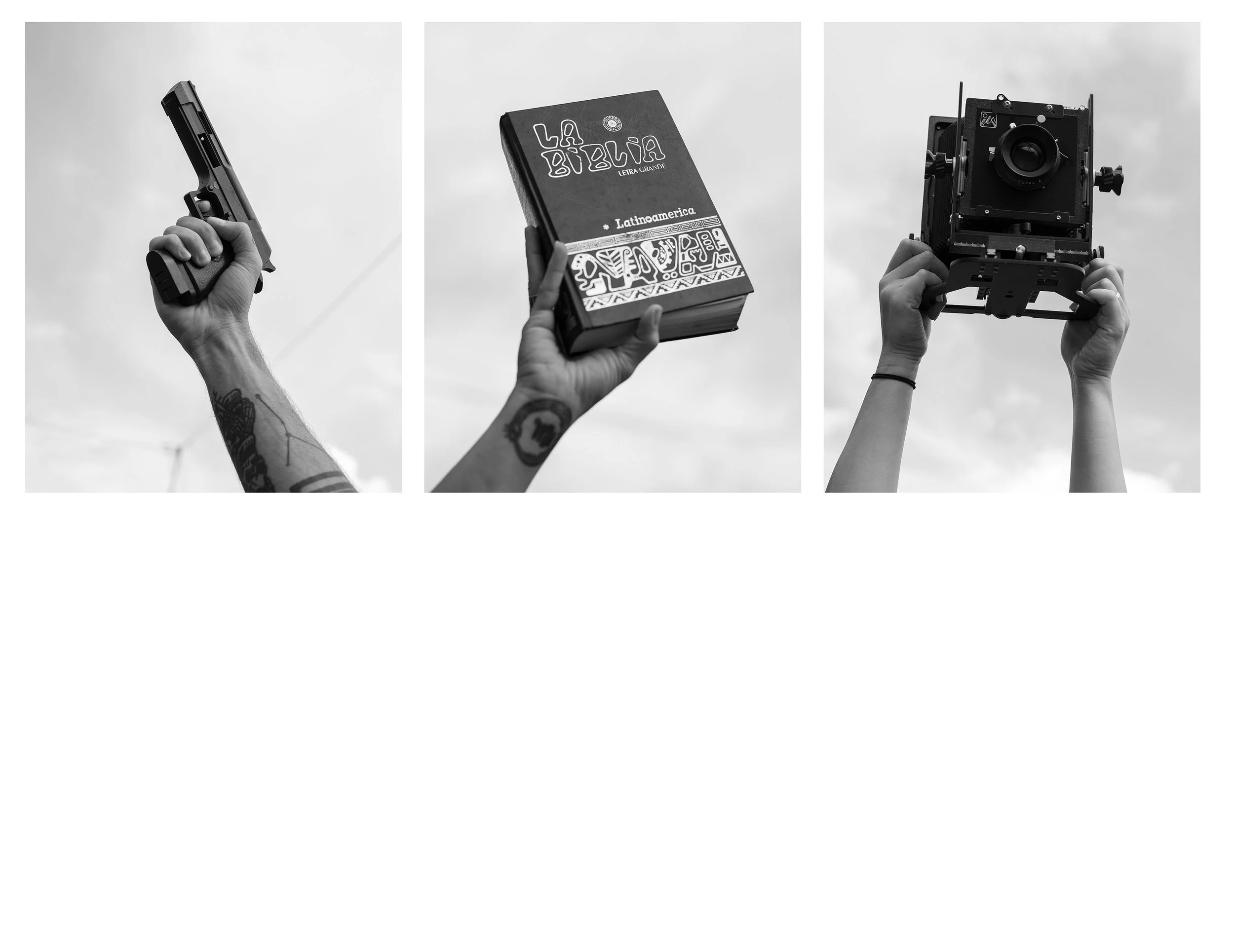
In the politically charged triptych Weapons of Colonization, the artist’s hand holds a gun, a Bible, and a 4×5 camera—objects historically used to enforce colonial power. Drawing on writer Teju Cole’s observation that the camera often arrived alongside instruments of domination, Camargo positions these familiar tools as symbols of systemic oppression in Latin America and elsewhere.
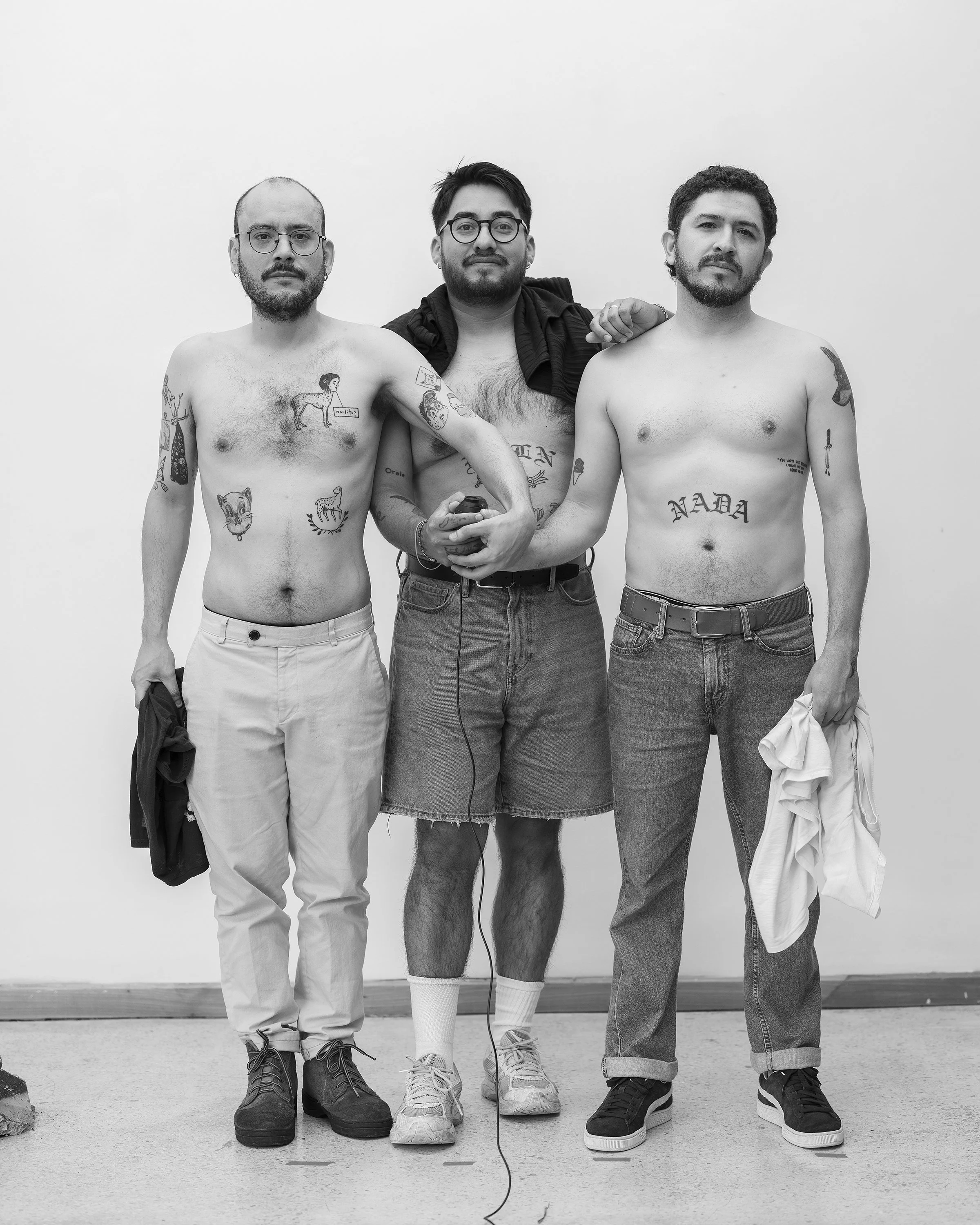
The exhibition also includes works from Camargo’s ongoing series of self-portraits exploring masculinity and vulnerability within Latine communities. In these collaborative photographs, the artist invites male-identifying participants to control the shutter release. Participants are encouraged to consider gestures of openness and vulnerability, challenging cultural expectations surrounding machismo. Produced in Costa Rica where traditional ideals of masculinity remain deeply ingrained, these images take on particular significance, offering space to reconsider how intimacy and identity are performed.
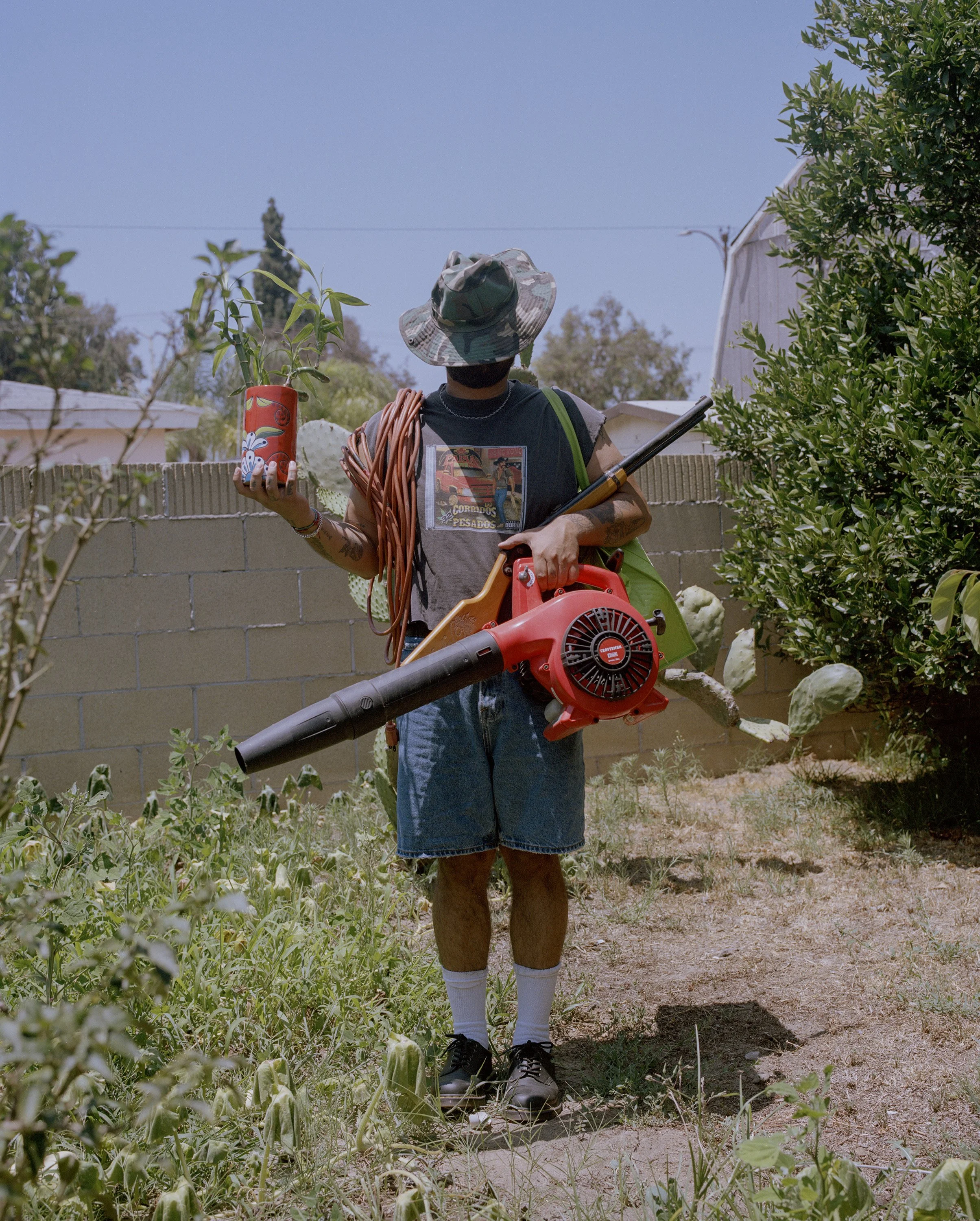
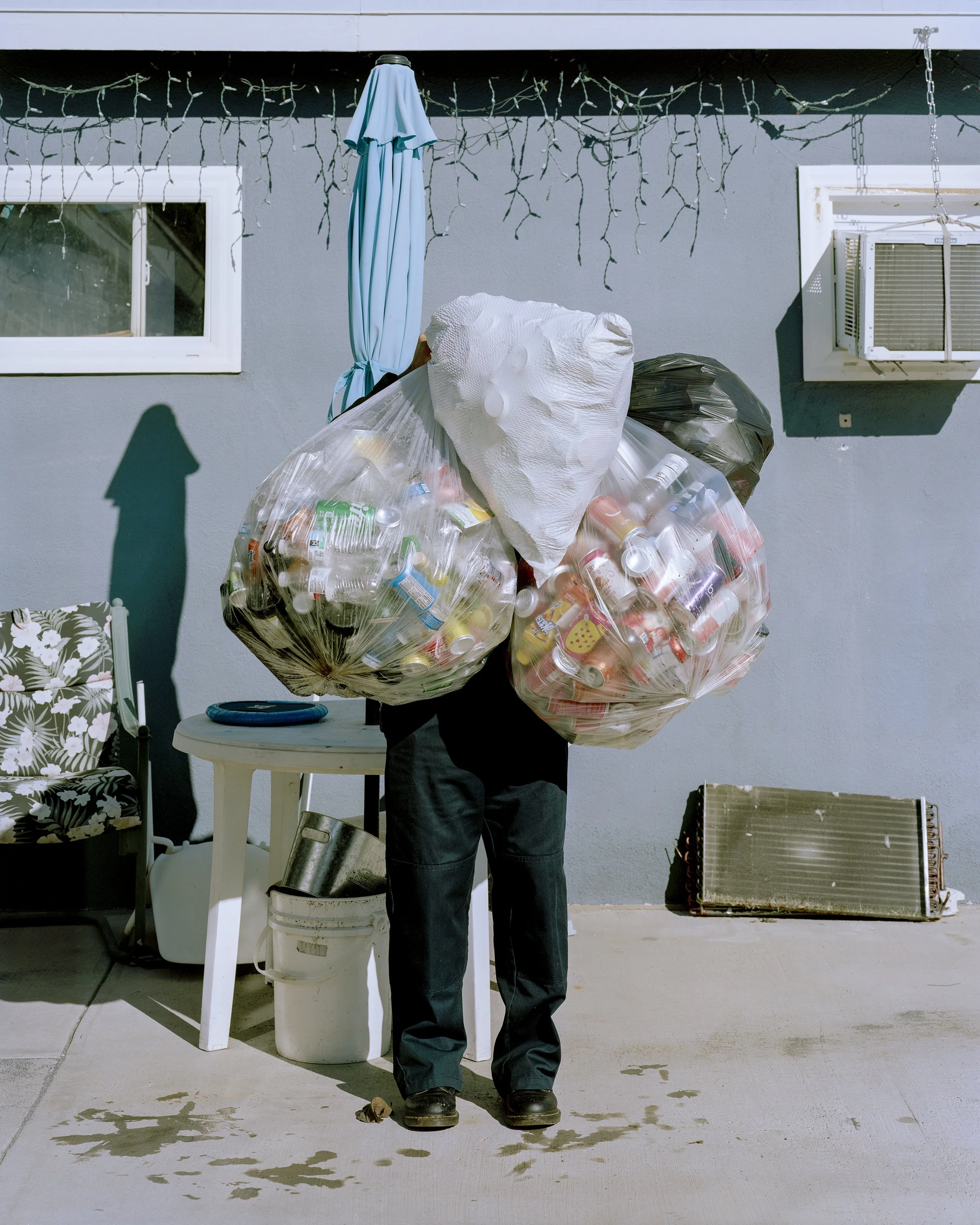
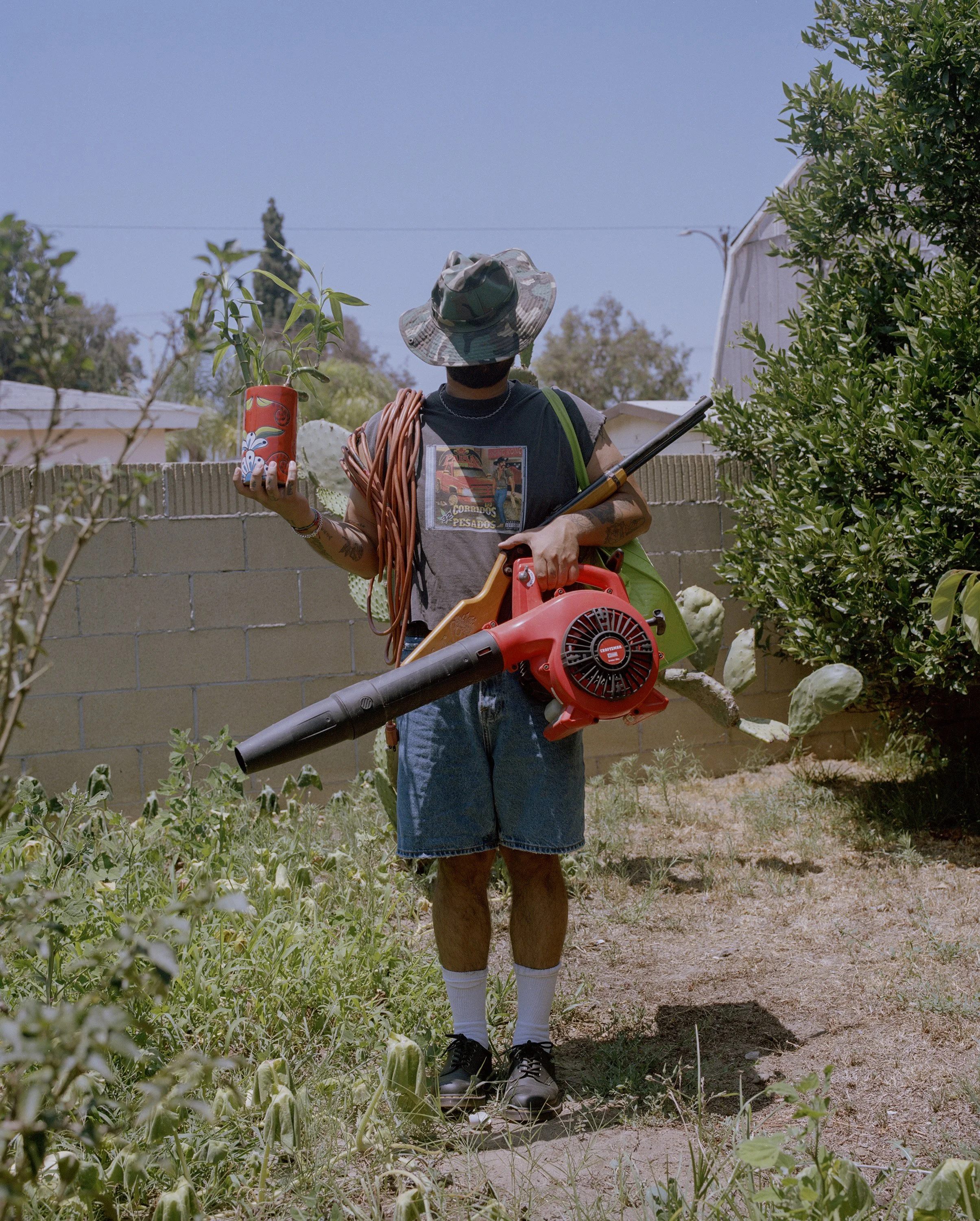
The series All That I Can Carry originated during the COVID-19 pandemic, when Camargo helped family members clear long-accumulated belongings from a backyard shed. Recognizing these objects as markers of family memory and resourcefulness, he staged portraits in which he physically carries as many items as possible. In All That I Can Carry #12, Camargo balances a toy rifle, a leaf blower, an extension cord, and a potted marijuana plant against the backdrop of a banal suburban backyard. These images humorously blend performance, sculpture, and family archive while reflecting the weight of personal and communal histories.
In the front gallery, the exhibition will feature selections from earlier projects including Origins & Displacements, recently published as a monograph by For The Birds Trapped in Airports, and Becoming a Cholo, work that interrogates racial profiling, cultural identity, and the politics of representation.
Across these bodies of work, Camargo deploys strategies of conceptual photography and performance for the camera to merge personal narrative with broader questions of place and historical memory. Like artists Christina Fernandez and James Luna, Camargo engages cultural stereotypes, using his own body to confront and reframe narratives about labor and social structures. By emphasizing trust and shared authorship, his work also resonates with artists such as Carrie Mae Weems, who use staged photography to explore identity, interpersonal dynamics, and the intersection of personal and social histories.
All That I Can Carry marks an important continuation of the artist’s evolving practice while reflecting the transnational connections fostered through the HSC&A / satis.FACTORY residency program.
Press inquiries can be directed to Diana Fitzgibbon at diana@hannahsloan.com.
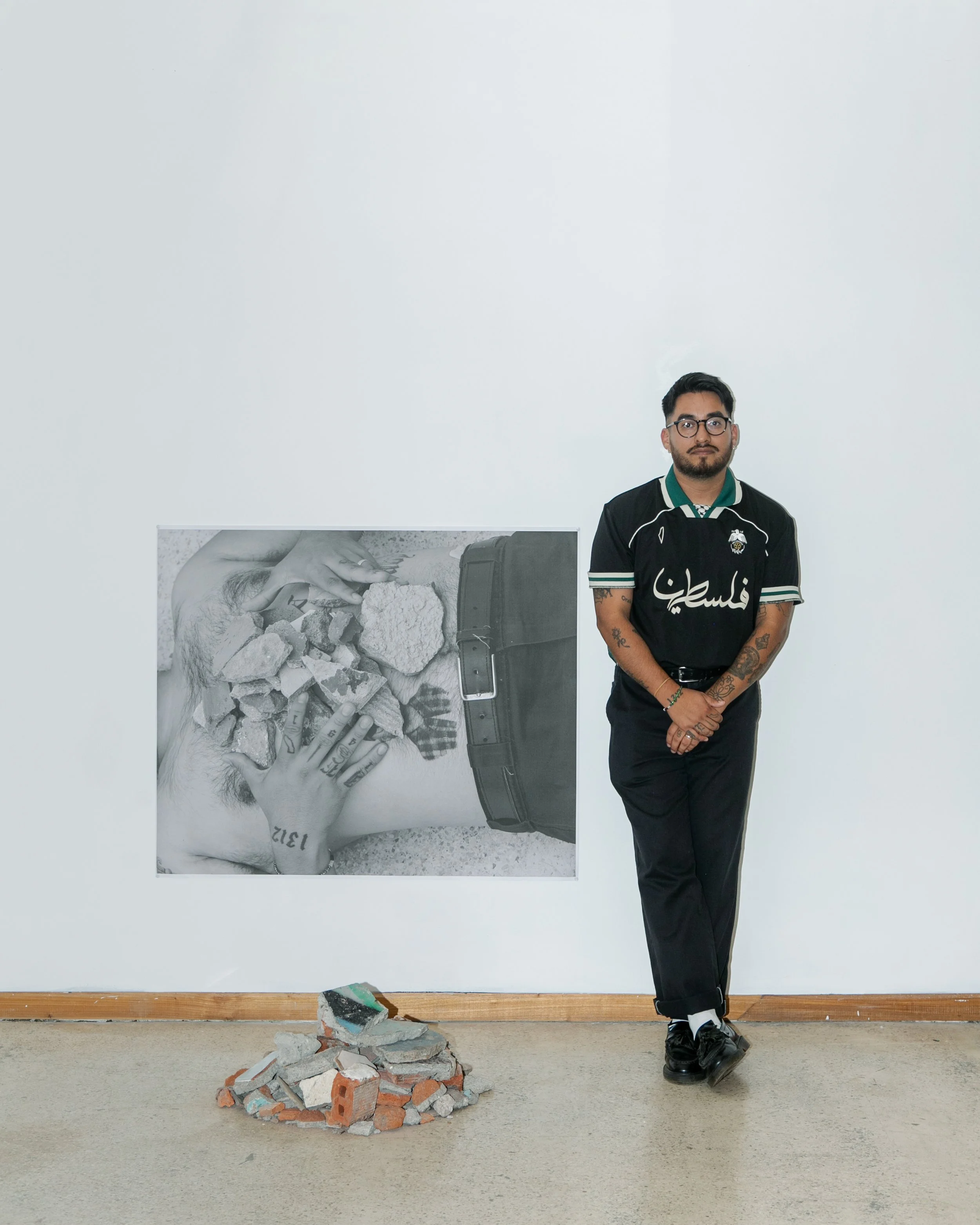
/ About
William Camargo is a photographer and interdisciplinary artist whose work examines migration, indigeneity, labor, and the politics of place through performance, self-portraiture, and archival research. Raised in Anaheim, California, Camargo often uses his body as a site of intervention within urban and historical landscapes, addressing the social forces that shape communities across the Americas. During his recent residency at satis.FACTORY in San José, Costa Rica, the artist developed new works responding to local conversations around gentrification, urban expansion, and Indigenous histories—concerns that resonate with similar transformations occurring in Southern California.
Camargo received an MFA from Claremont Graduate University and a BFA from California State University, Fullerton, and currently teaches photography at Pasadena City College and Cal State Fullerton. Camargo has exhibited widely, including at the Phoenix Art Museum, Pérez Art Museum Miami, and The Huntington. His work is currently included in Chicano Camera Culture: A Photographic History, 1966–2026 at The Cheech, Riverside, through September 6, 2026. Camargo’s work is held in the permanent collections of the J. Paul Getty Museum, the National Gallery of Art, the The Huntington Library Art Museum and Botanical Gardens, and the Museum of Fine Arts Houston, among others.