LA LUCHA / de la Torre Brothers: Turbulent Times
October 15 - November 14, 2026
VIP Preview, Third Thursday Artwalk: Thursday, October 15 from 5-8 PM
Reception for the Artists: Saturday, October 24 from 6-8 PM
SCAPE Annex
2859 East Coast Highway, Corona del Mar, CA 92625
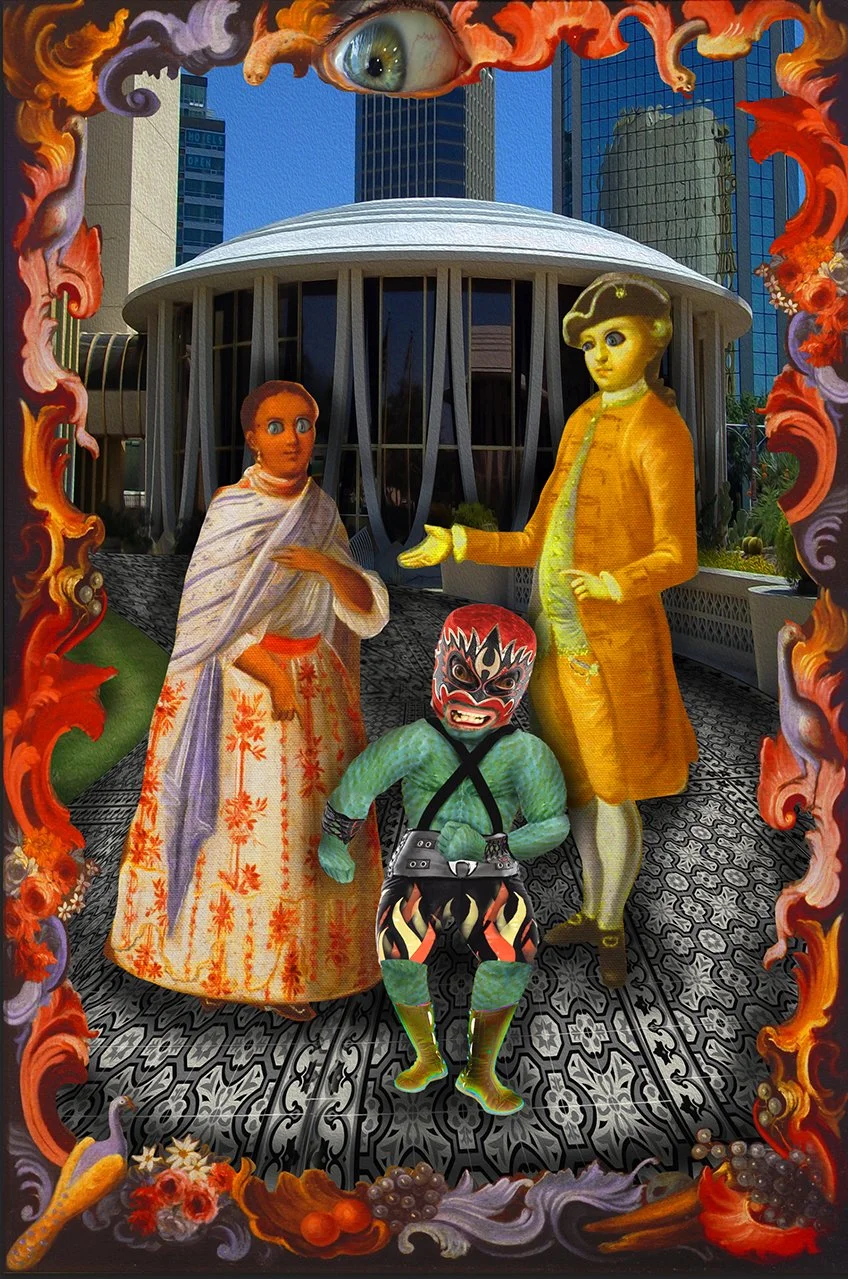
Katie Shapiro, Passing Through to the Other Side, 2026, inkjet print, mirror, etched glass, 28 x 43 x 3.5 inches
Press Release
CORONA DEL MAR, CA - SCAPE Annex presents La Lucha, a pop-up exhibition pairing Turbulent Times, a selection of glass and lenticular works by Einar and Jamex de la Torre, with a complementary group of works by Los Angeles Chicano artists, curated by Hannah Sloan. The exhibition coincides with the brothers’ ambitious immersive exhibition The Tipping Point at Laguna Art Museum, on view through January 24, 2027.
La Lucha places the de la Torre Brothers in direct conversation with Southern California Chicano artists who share their interest in identity, history, cultural memory, and resistance. Many of the artists work across media and embrace bold color, dense layering, humor, and visual excess, a shared language that has evolved across generations of Chicano art.
Brothers Einar and Jamex de la Torre were born in Guadalajara, Mexico. In 1972, a sudden family move took them from a traditional Catholic school in Mexico to the small Southern California beach town of Dana Point. Both studied at California State University, Long Beach, and have taught at the renowned Pilchuck Glass School in Washington State. Today, they live and work on both sides of the border, in Baja California’s Guadalupe Valley and in San Diego. The contradictions of the immigrant experience and bicultural identity remain central to their practice.
Collaborating since the 1990s, the brothers have developed a distinctive visual language encompassing mixed media, blown glass, installation, photomurals, and lenticular printing. Their approach is additive, layering material upon meaning in a humorous, multilayered baroque that draws on religious iconography, German Expressionism, Mexican vernacular arts, and Pre-Columbian art. Together, they have received a United States Artists Fellowship, a Louis Comfort Tiffany Foundation Award, and a Joan Mitchell Foundation award.
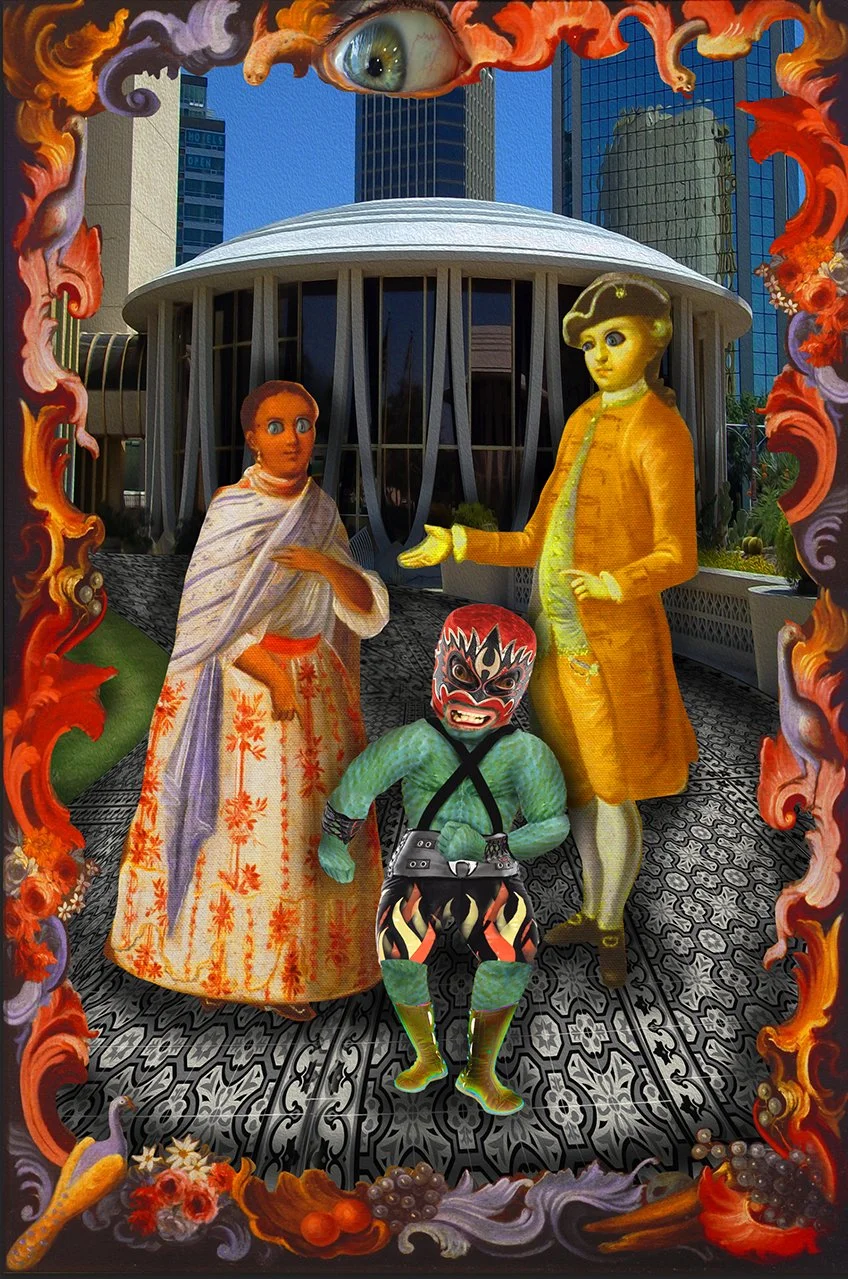
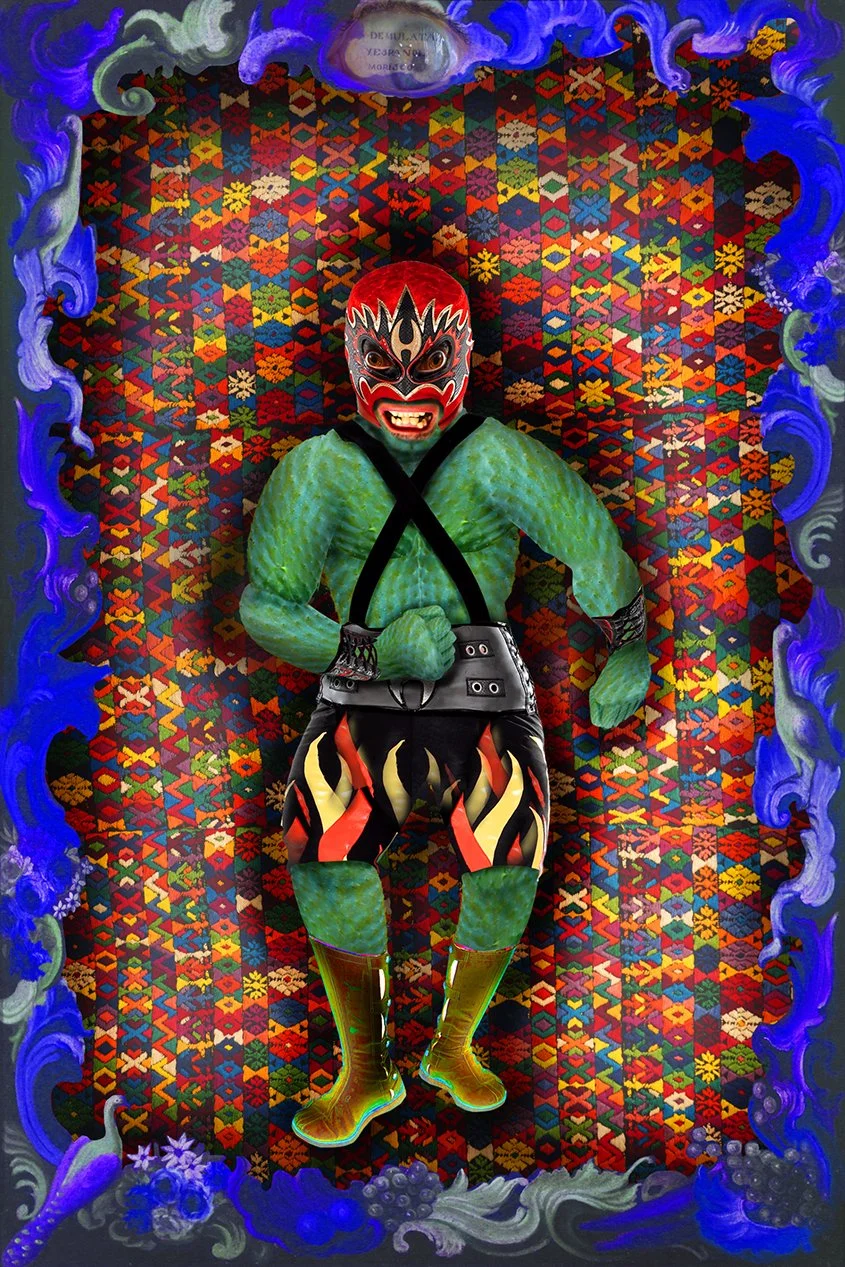
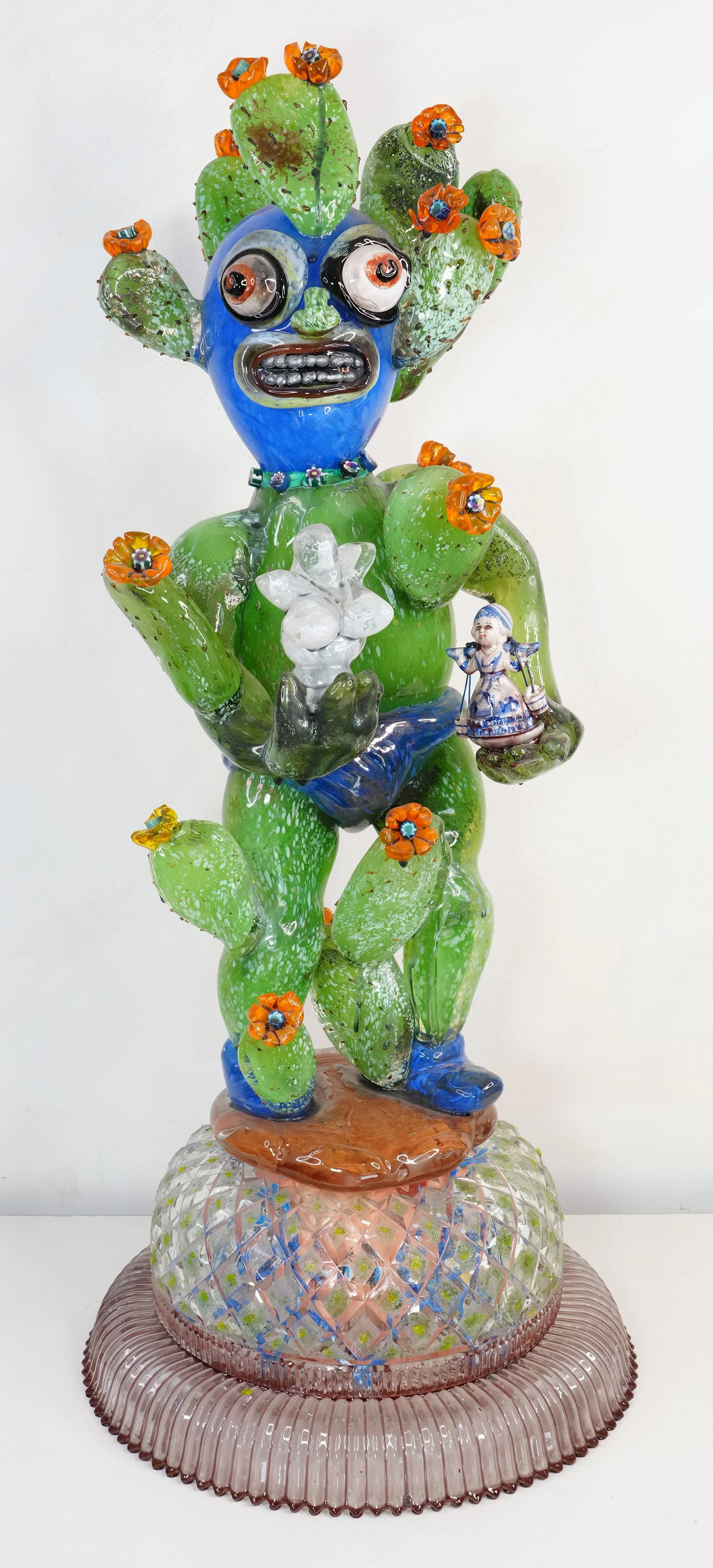
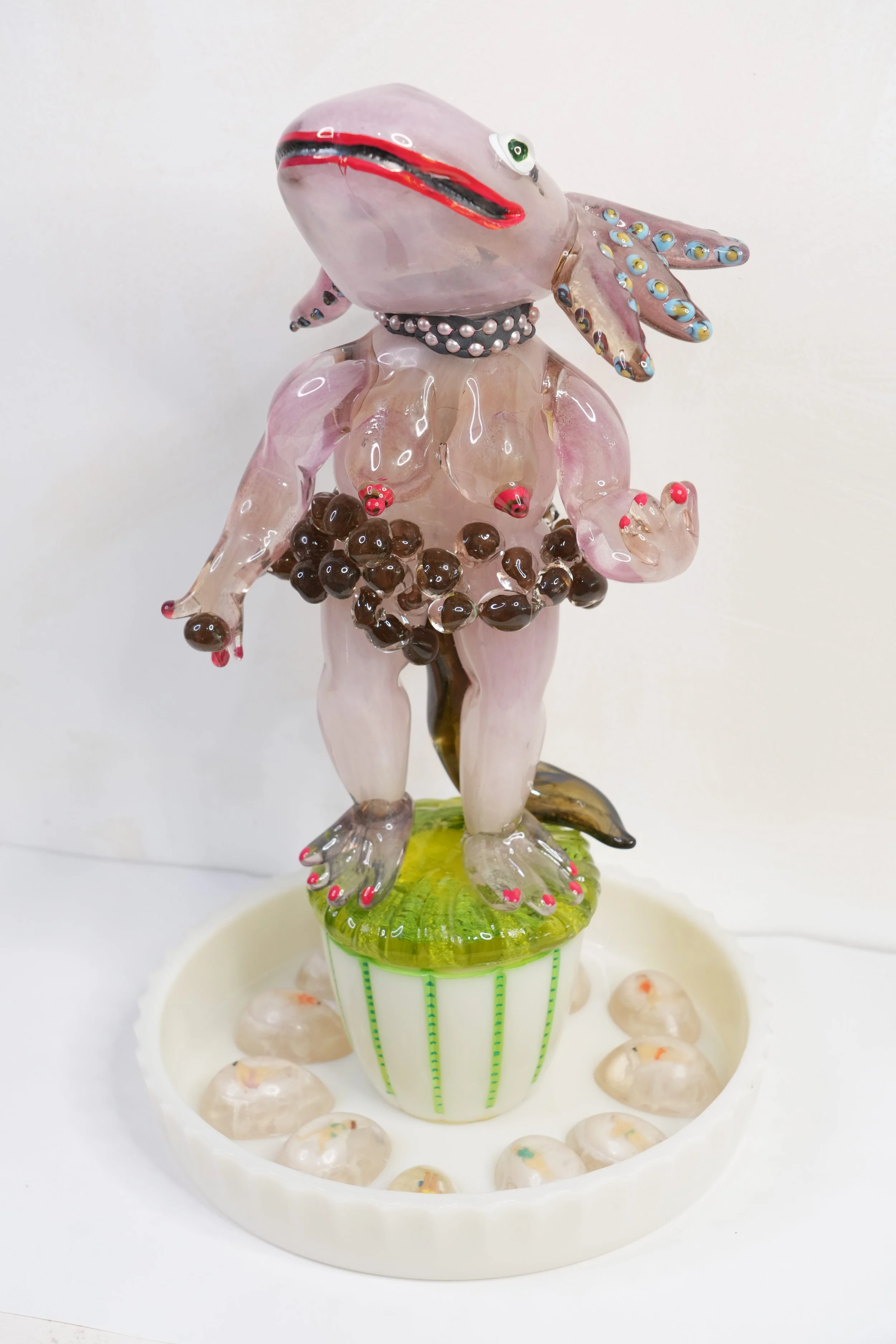
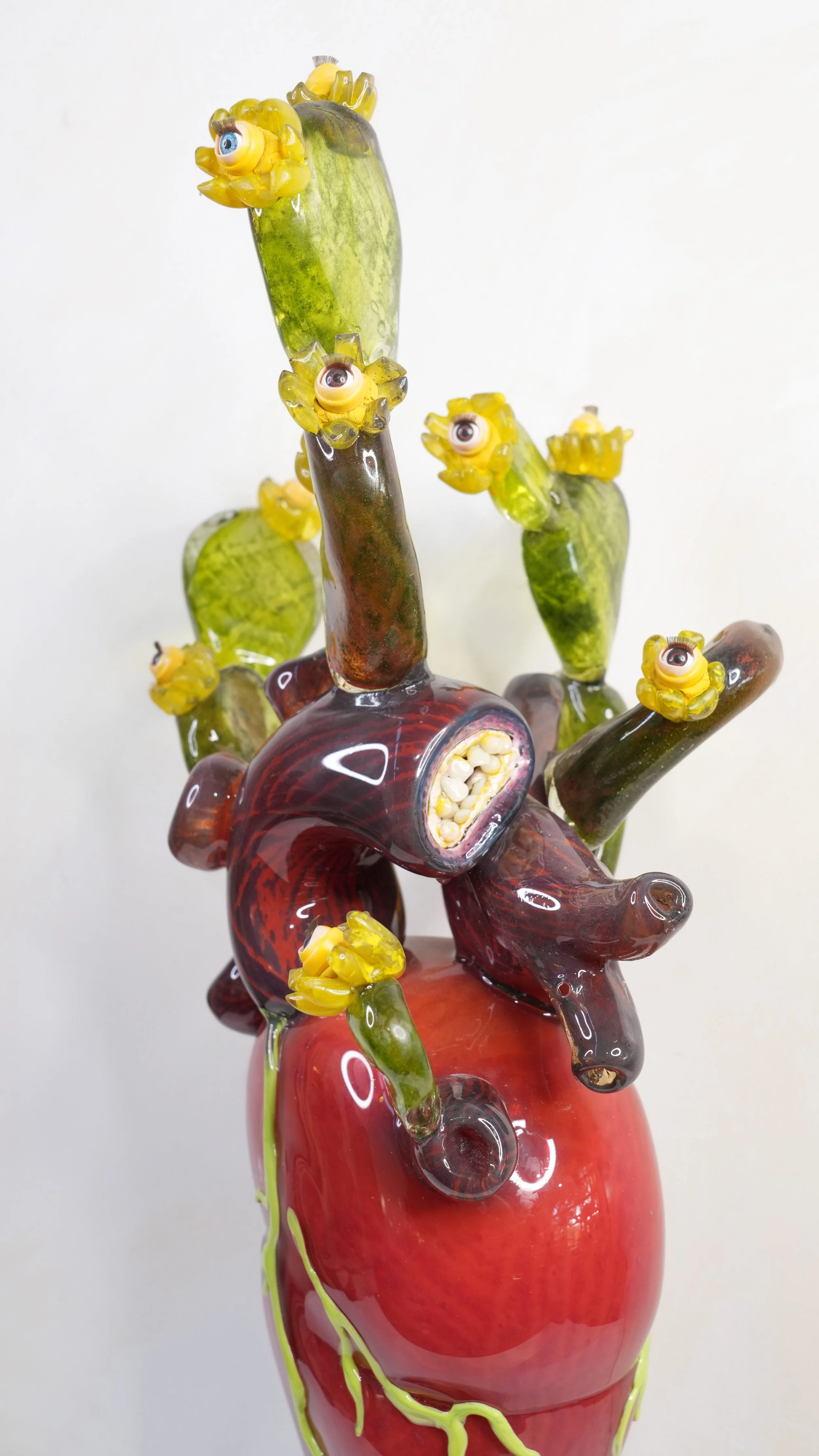
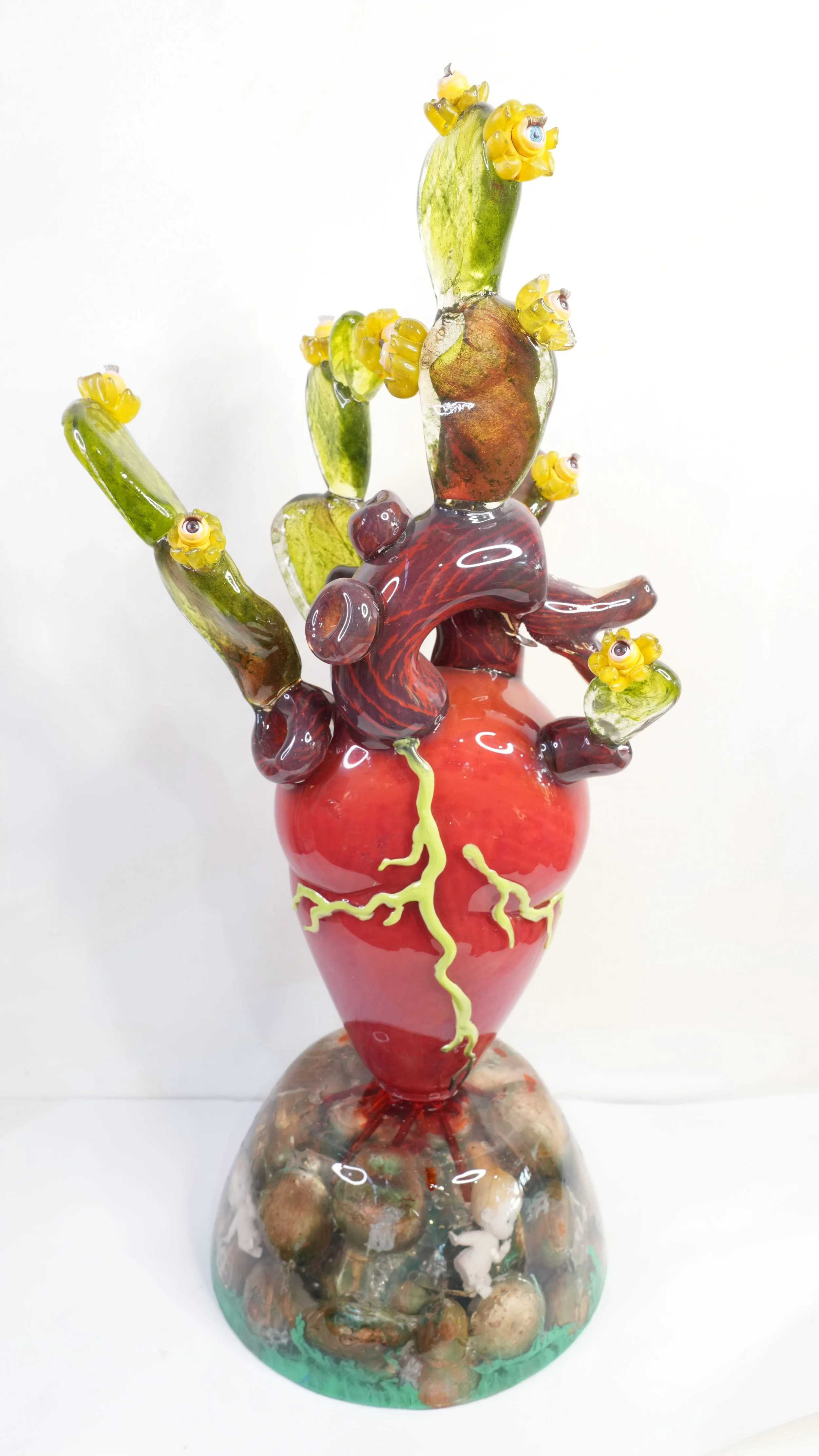
At the center of Turbulent Times is a lenticular work from the brothers’ Nopalero series. The series reimagines 18th-century casta paintings, which attempted to classify the people of colonial New Spain within a rigid racial hierarchy. The de la Torre Brothers replace these colonial categories with mixed figures whose bodies take the form of nopal cacti and whose poses recall luchadores and luchadoras: prickly, feisty, and strong. They reclaim the old insult con el nopal en la frente (“with the cactus on your forehead”) as a source of pride. Like the nopal, which thrives under harsh conditions while continuing to bloom and bear fruit, these figures embody the resilience of immigrant communities throughout the southern border states.
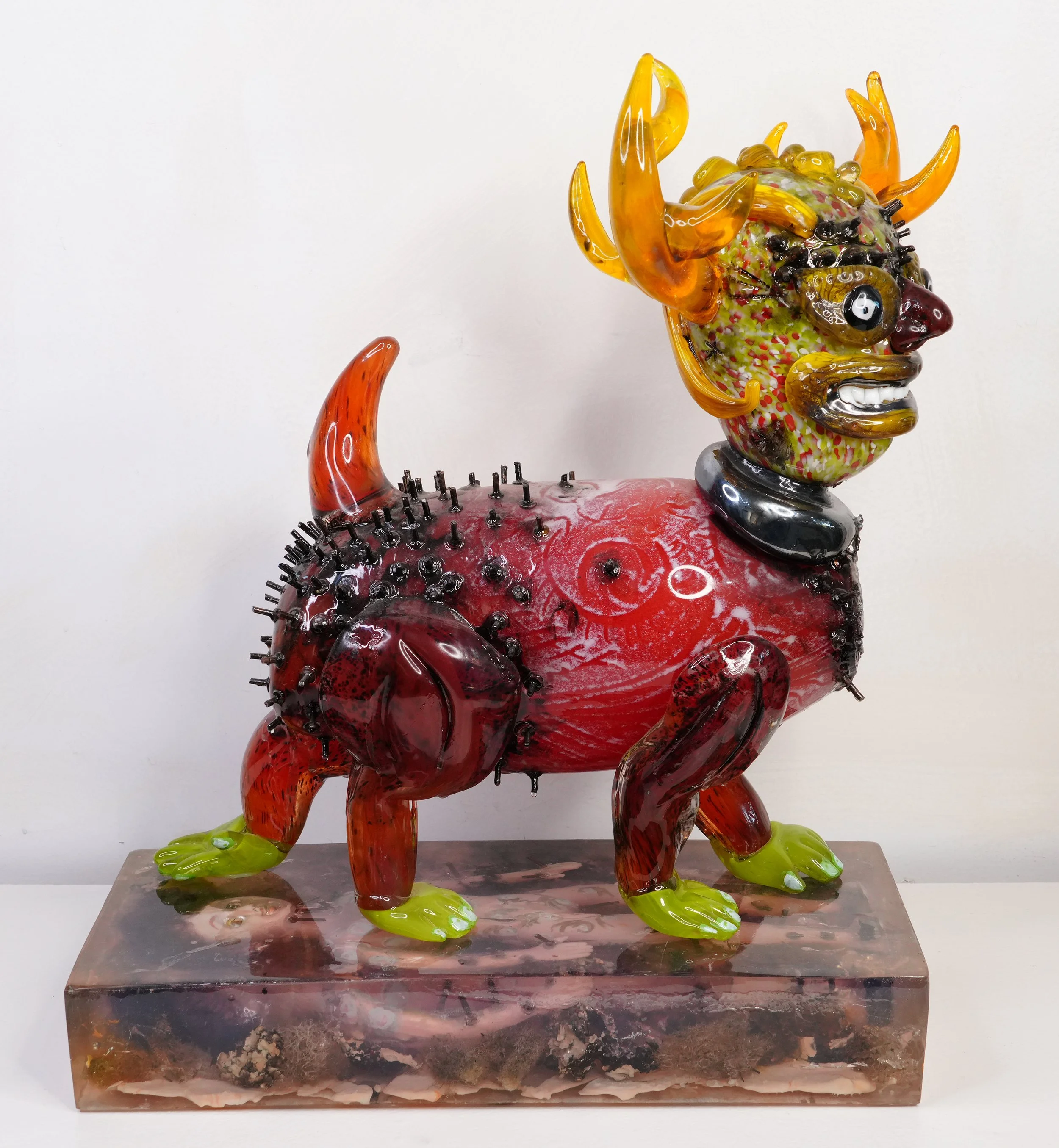
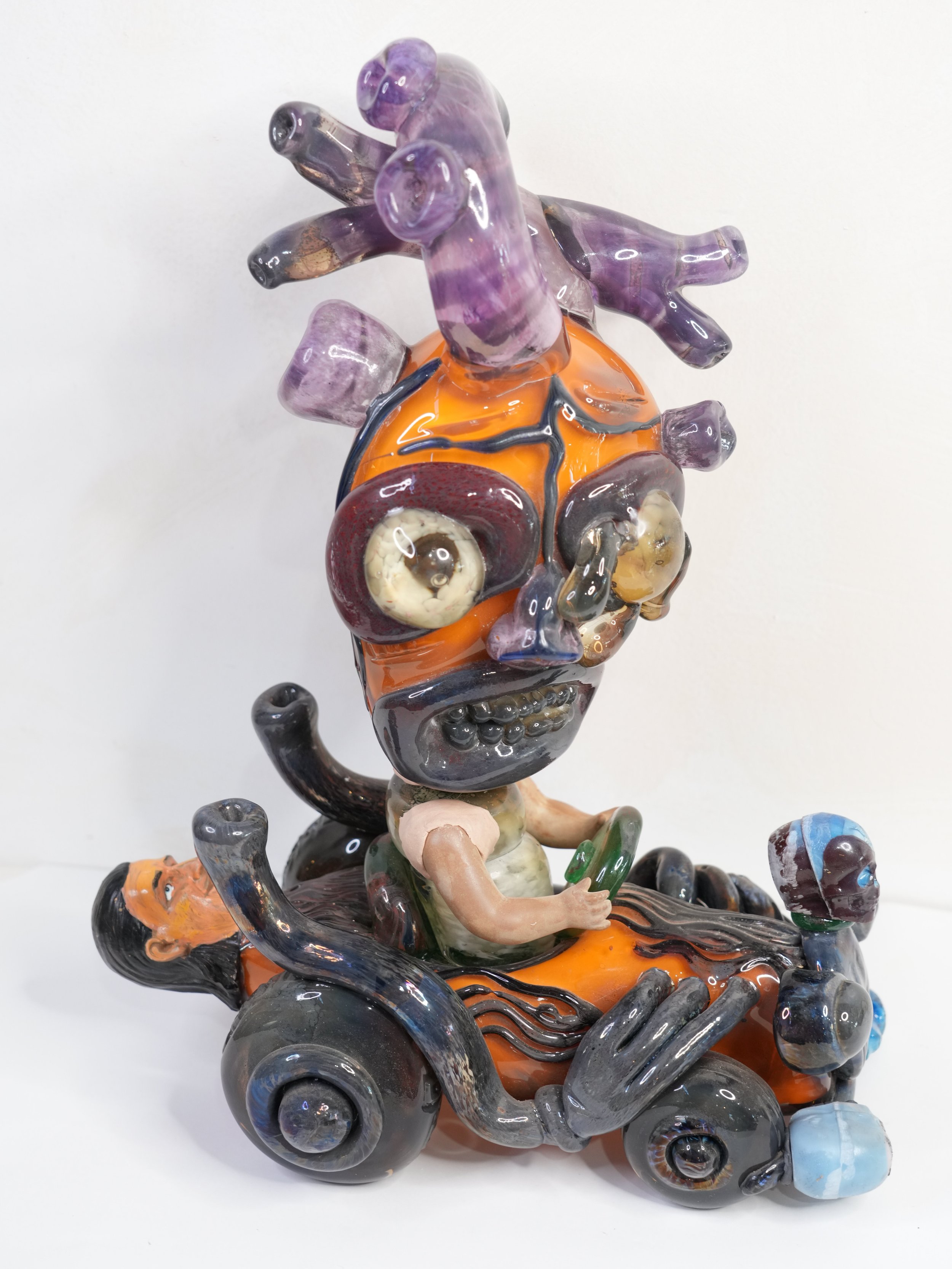
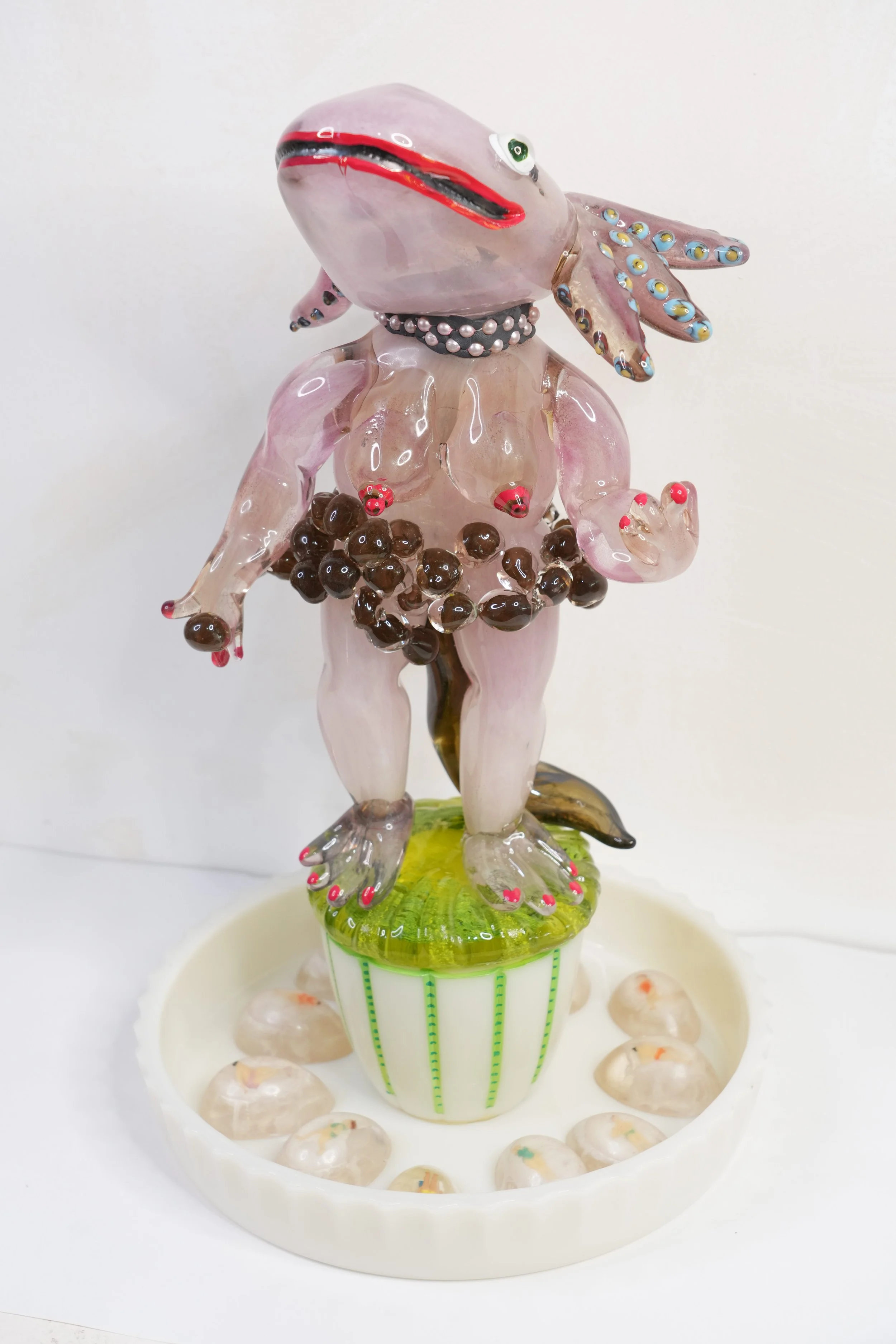
The lenticular work is accompanied by a selection of recent blown-glass sculptures. Running AMOC, named for the Atlantic Meridional Overturning Circulation, the Atlantic current system that scientists warn may be approaching a tipping point, rests on a cast-resin base. A thick-walled glass wrestler’s head bends and magnifies light like a lens, transforming the luchador through the brothers’ signature medium.
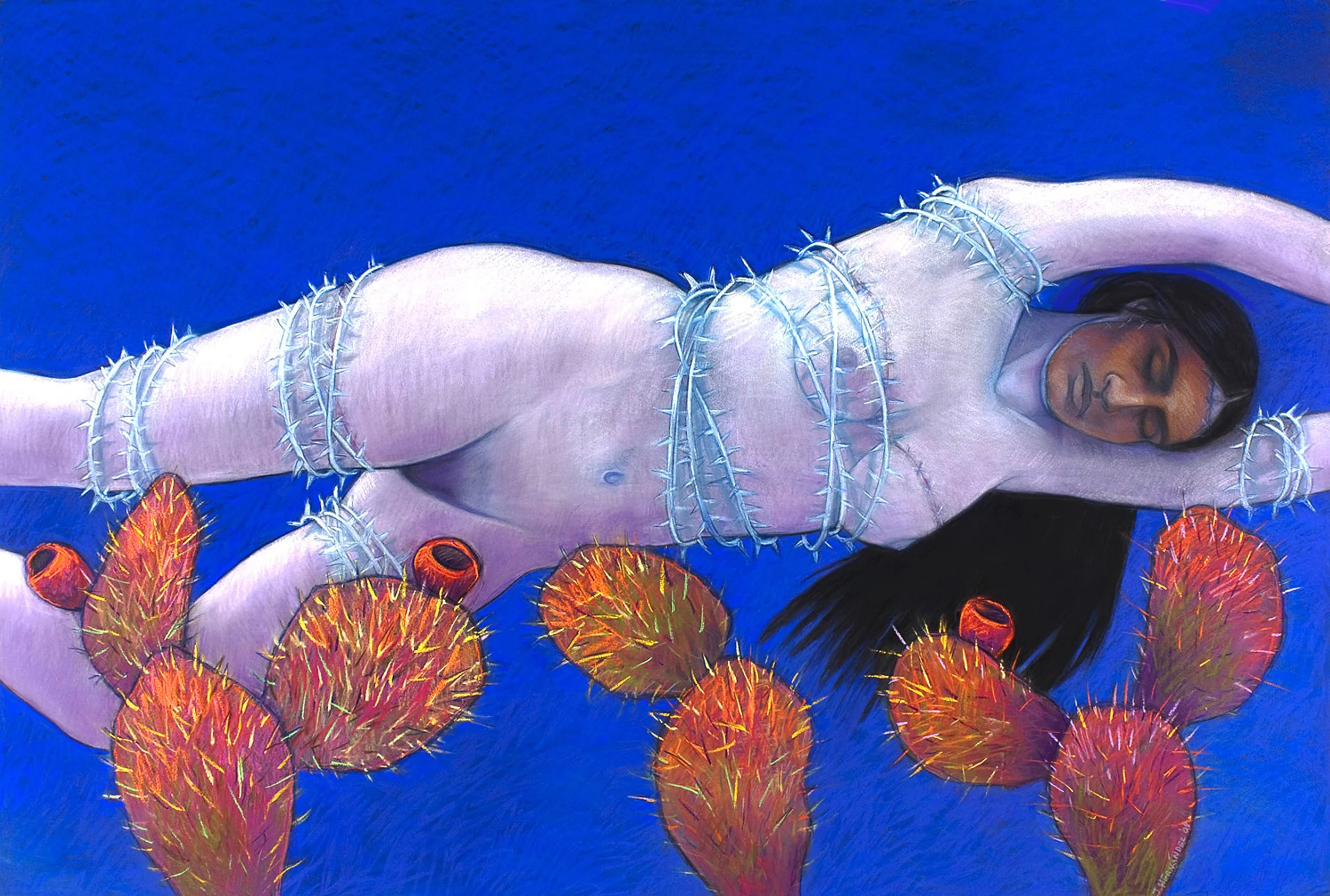
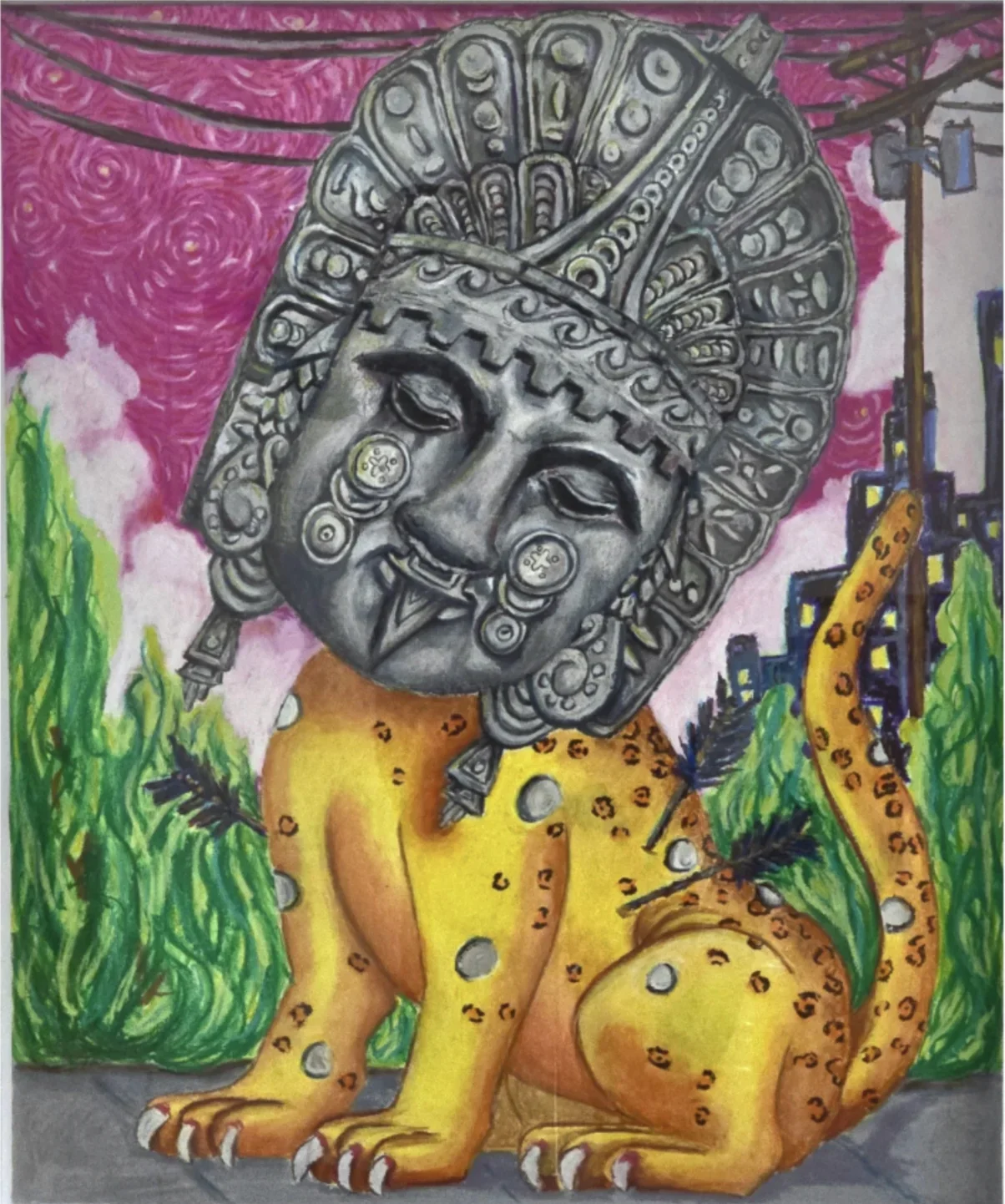
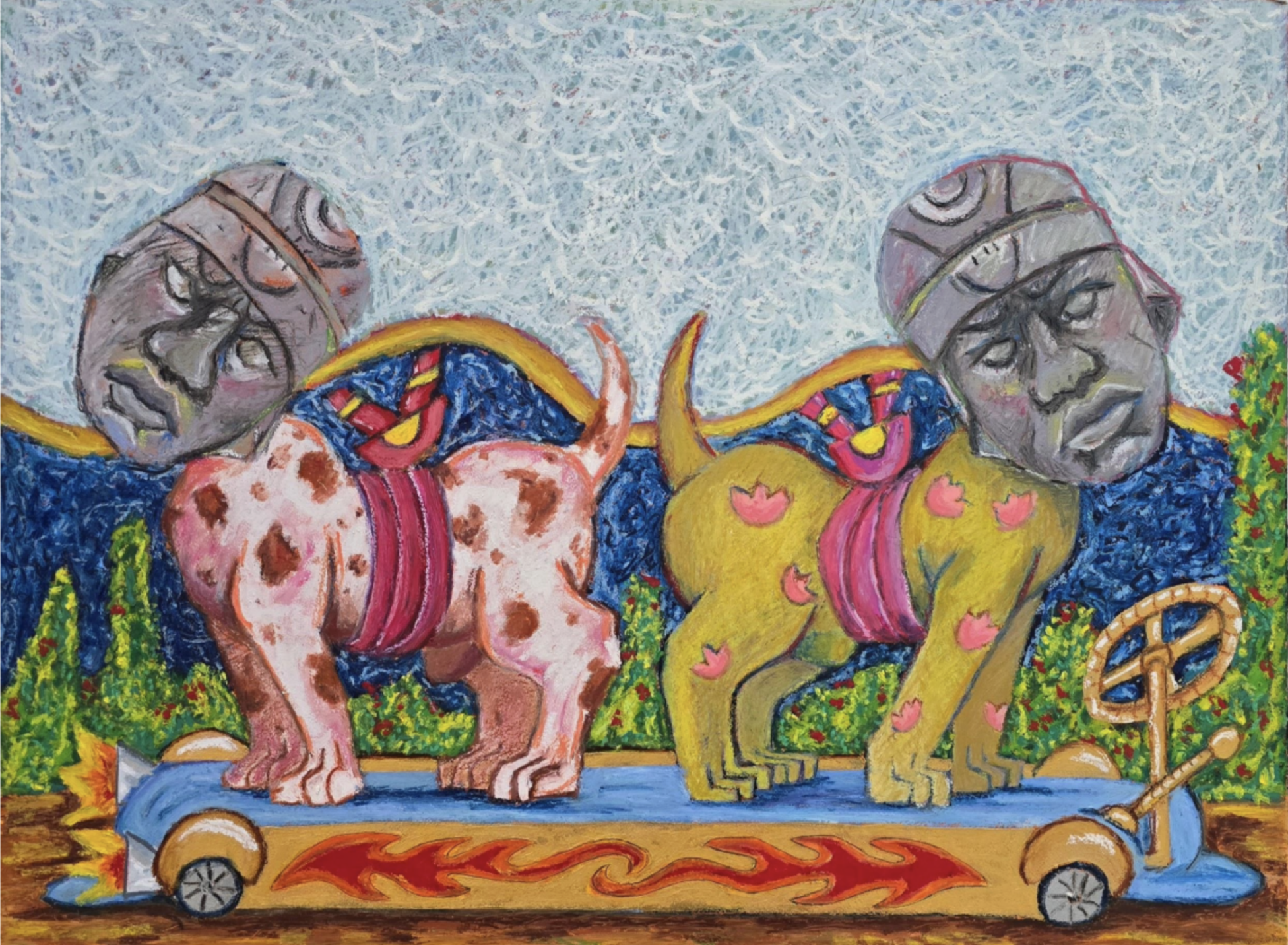
Alongside the de la Torre Brothers, curator Hannah Sloan brings together works by seminal Los Angeles Chicano artists Judithe Hernández and Gilbert “Magu” Luján, both members of the landmark collective Los Four, as well as José Lozano, with works by a younger generation of artists including Victor Reyes, Javier Carrillo, and Jacqueline Valenzuela.
Across generations, these artists have engaged the cultural and political realities of Mexican American life in Southern California while developing visual languages rooted in community, popular culture, mythology, labor, and memory. Their work celebrates the signs and symbols of Chicano life: lowriders and overloaded work trucks, Aztec deities alongside contemporary Mexican icons, luchadores, and fantastical visions of Los Angeles. In Spanish, lucha means both wrestling and struggle. The artists in La Lucha hold both meanings at once, meeting the turbulence of their times with color, wit, imagination, and defiance.
In La Lucha, the de la Torre Brothers’ prickly, proud nopal fighters meet the visual language of Chicano Los Angeles. Across the exhibition, lowriders, luchadores, and the nopal on the forehead—once markers of marginalization, become emblems of pride, power, cultural memory, and beauty.”
This exhibition grew out of the timing of the de la Torre Brothers’ remarkable exhibition at Laguna Art Museum,” says Jeannie Denholm of SCAPE Gallery. “It became the launching pad for something broader: a chance to collaborate with two colleagues whose curatorial eyes I deeply admire: Hannah Sloan and Eleana Del Rio of Koplin Del Rio, who has represented the de la Torre Brothers for more than 20 years. I’m excited to present this exhibition in Corona Del Mar and to offer something fresh and new to Orange County’s coastal art community.
/ About
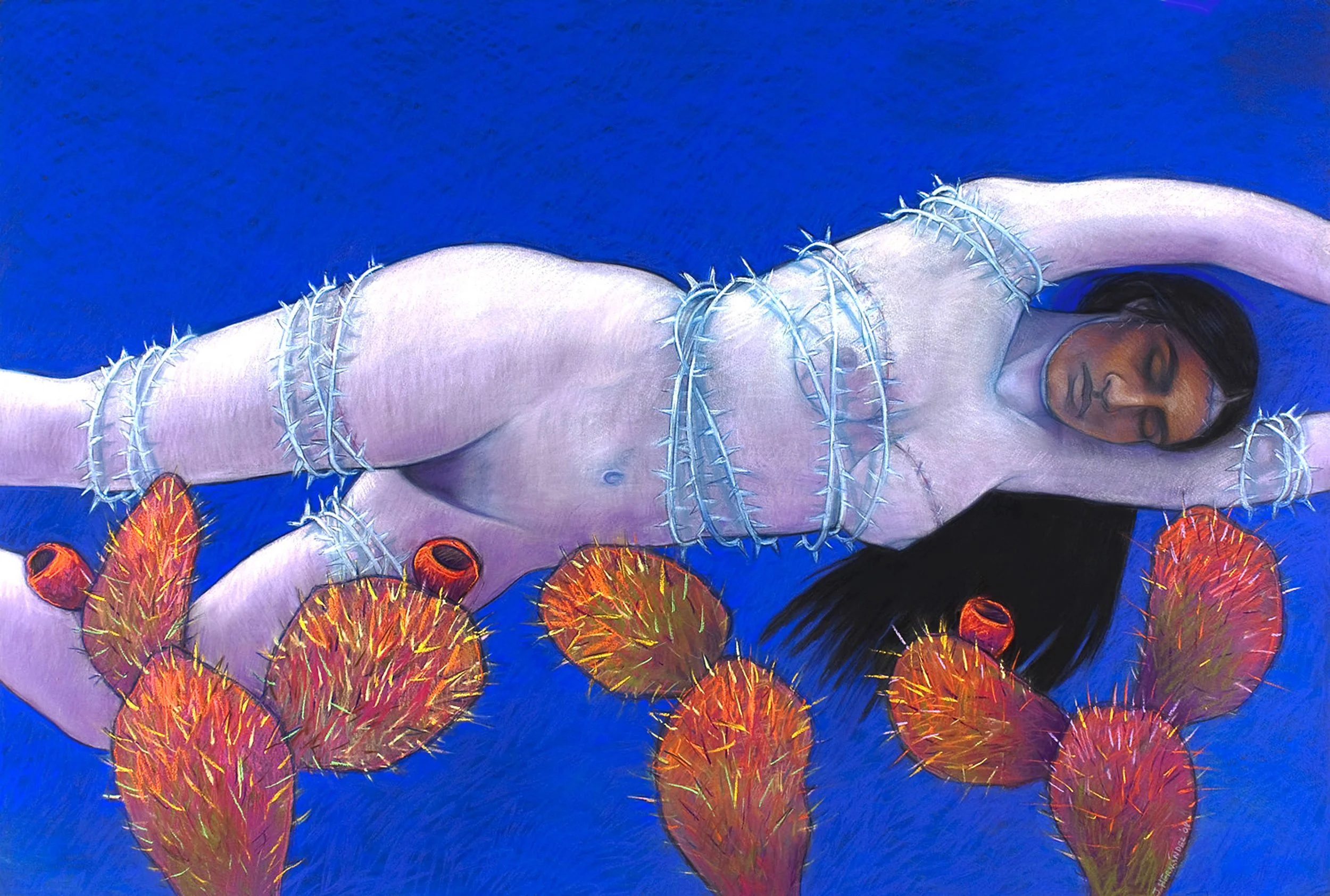
Judithe Hernández and Gilbert “Magu” Luján were members of Los Four, the influential Chicano art collective that became the first Chicano artist group to receive a major exhibition at a mainstream American museum. Hernández, a muralist central to the 1970s East Los Angeles renaissance, has spent five decades developing a vivid, mythic visual language in pastel. In 2024, she became the first artist to receive a major retrospective at the Cheech Marin Center for Chicano Art & Culture. Luján (1940–2011) created a playful cosmology he called Magulandia, populated by pyramid-mounted lowriders driven by anthropomorphic dogs and inhabited by a mythologized Los Angeles.
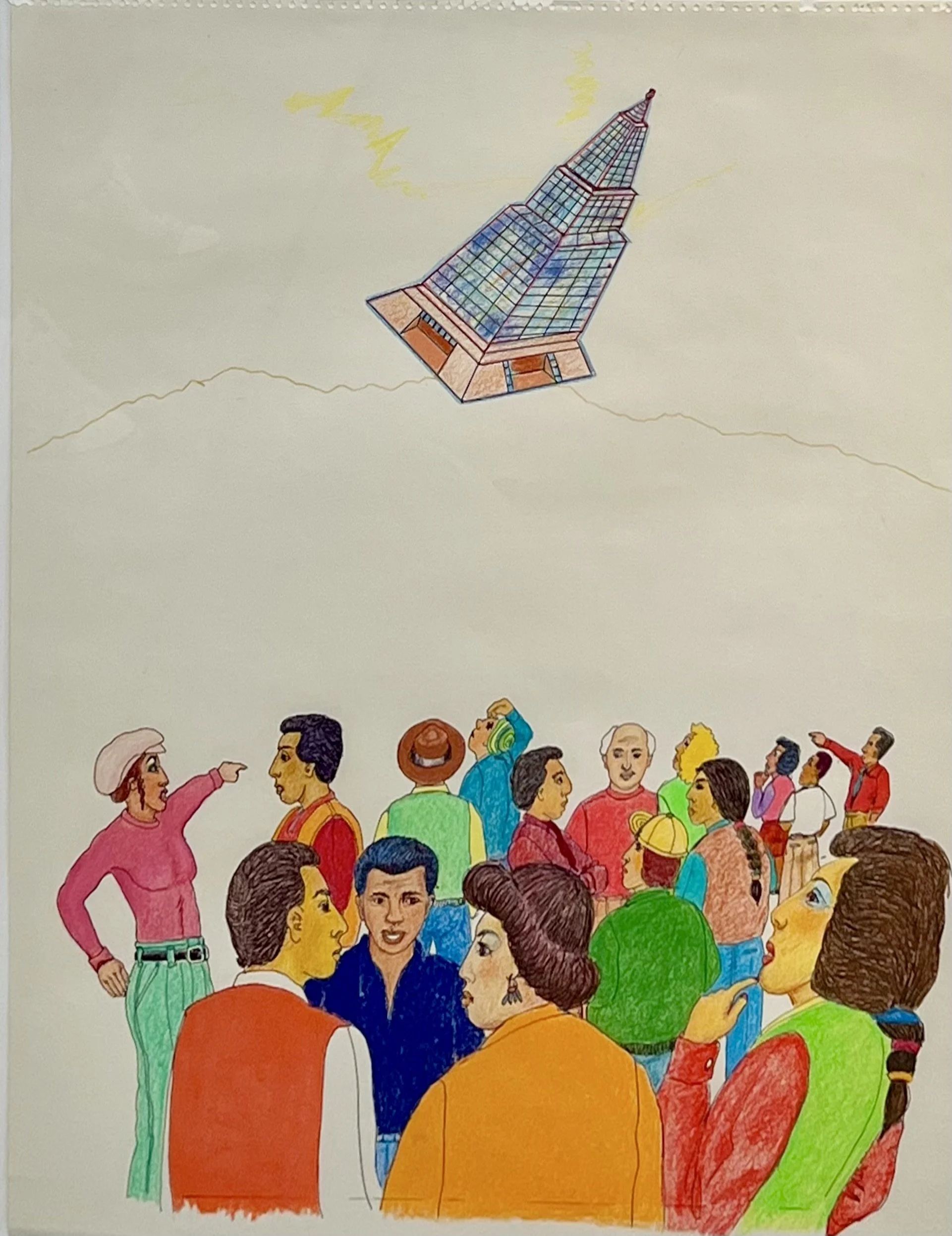
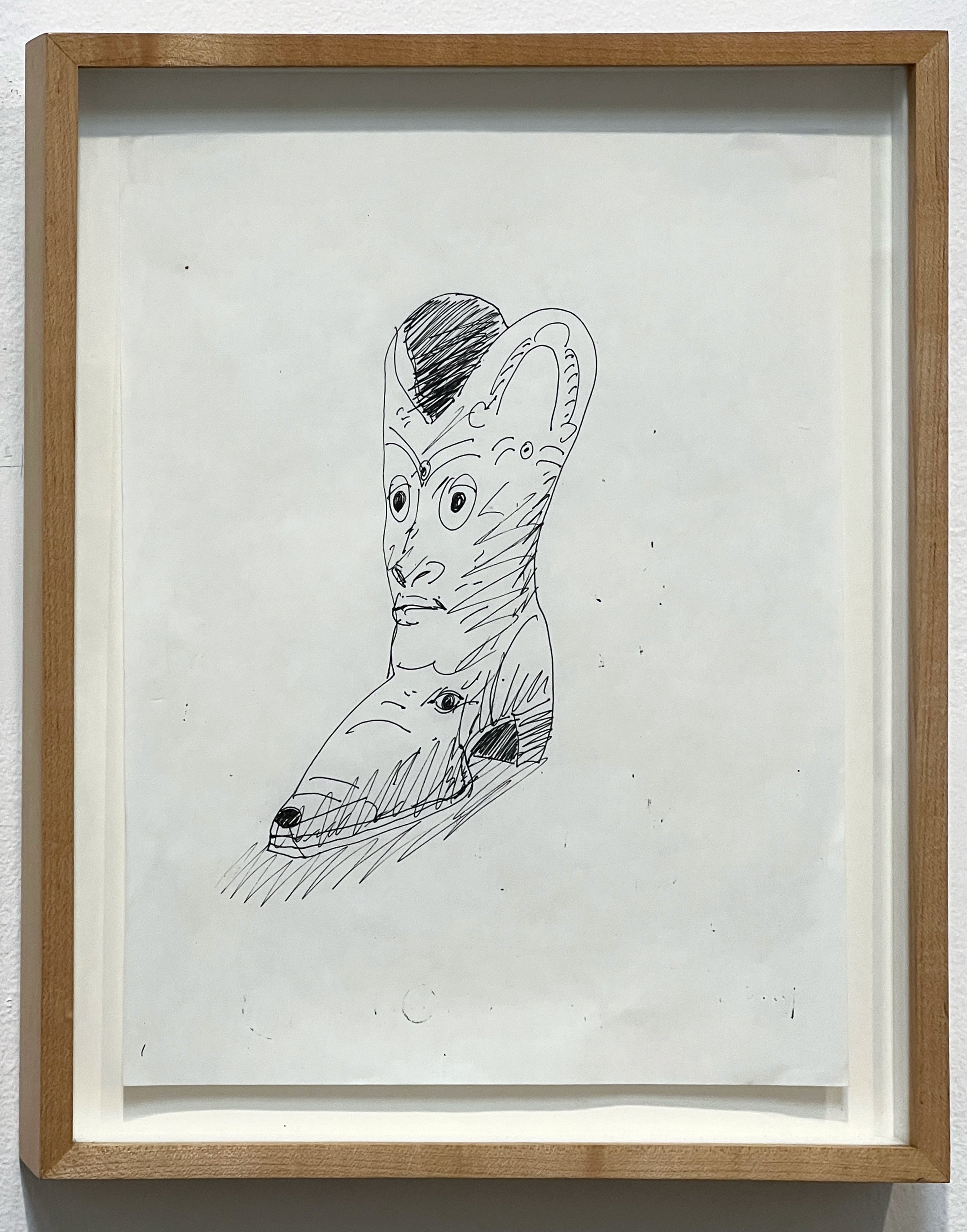
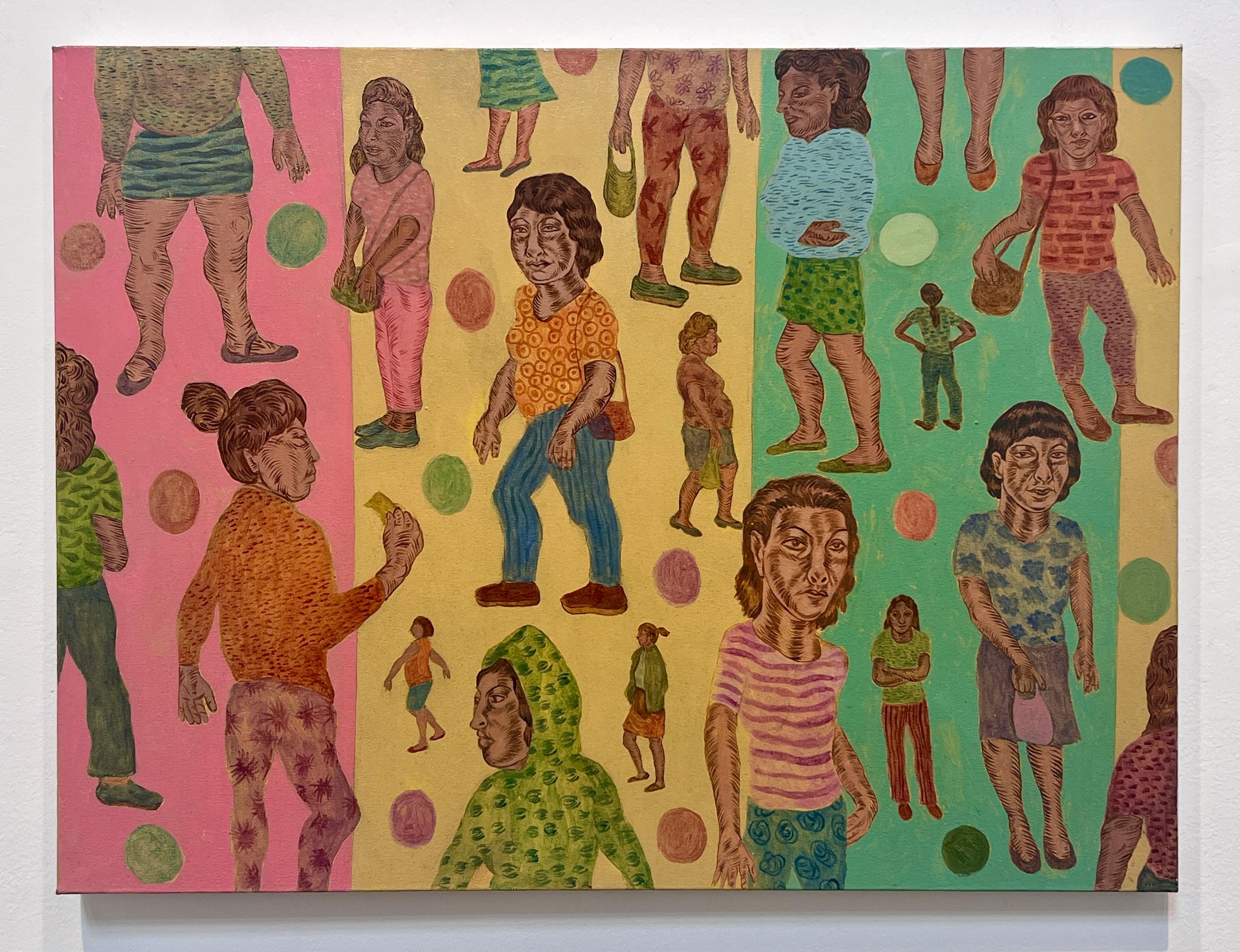
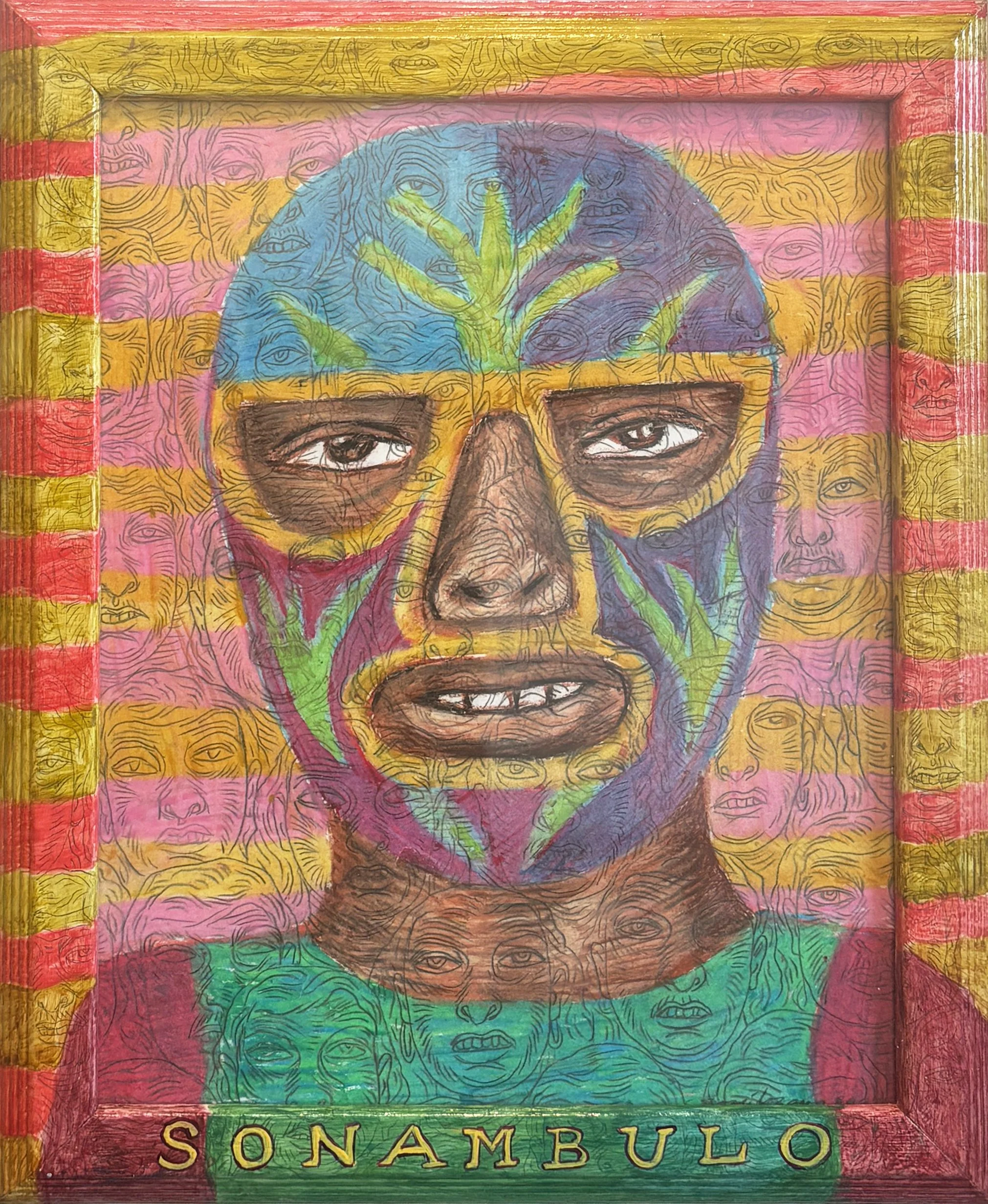
José Lozano (1959–2025) was a celebrated painter and draftsman whose work explored the cultural interplay between Mexico and Southern California. Born in Los Angeles and raised partly in Ciudad Juárez, he developed a visual language shaped by Mexican popular culture, everyday life, humor, and memory. His paintings and prints are populated by dense crowds, lucha libre masks, and sharply observed scenes of human comedy.
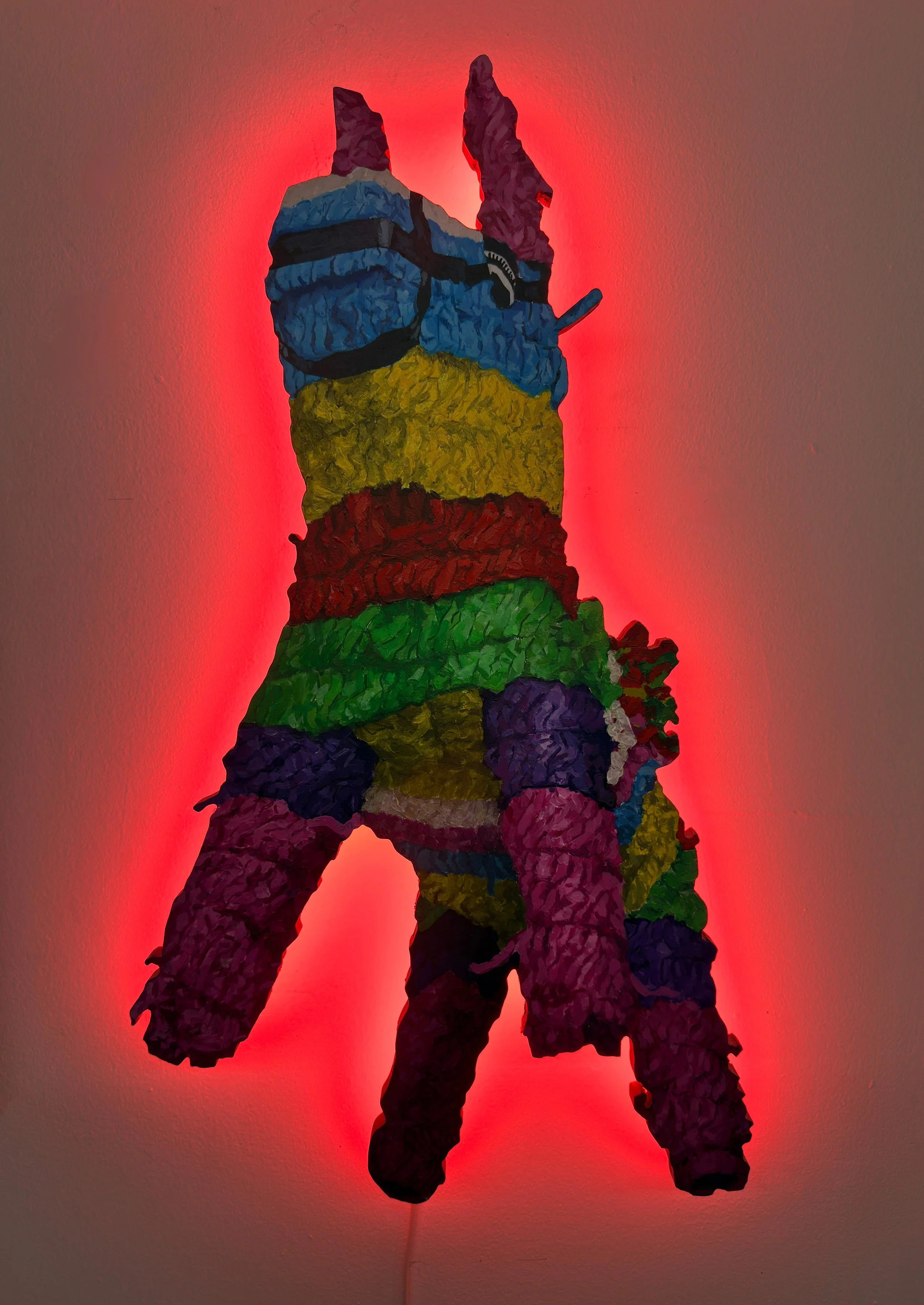
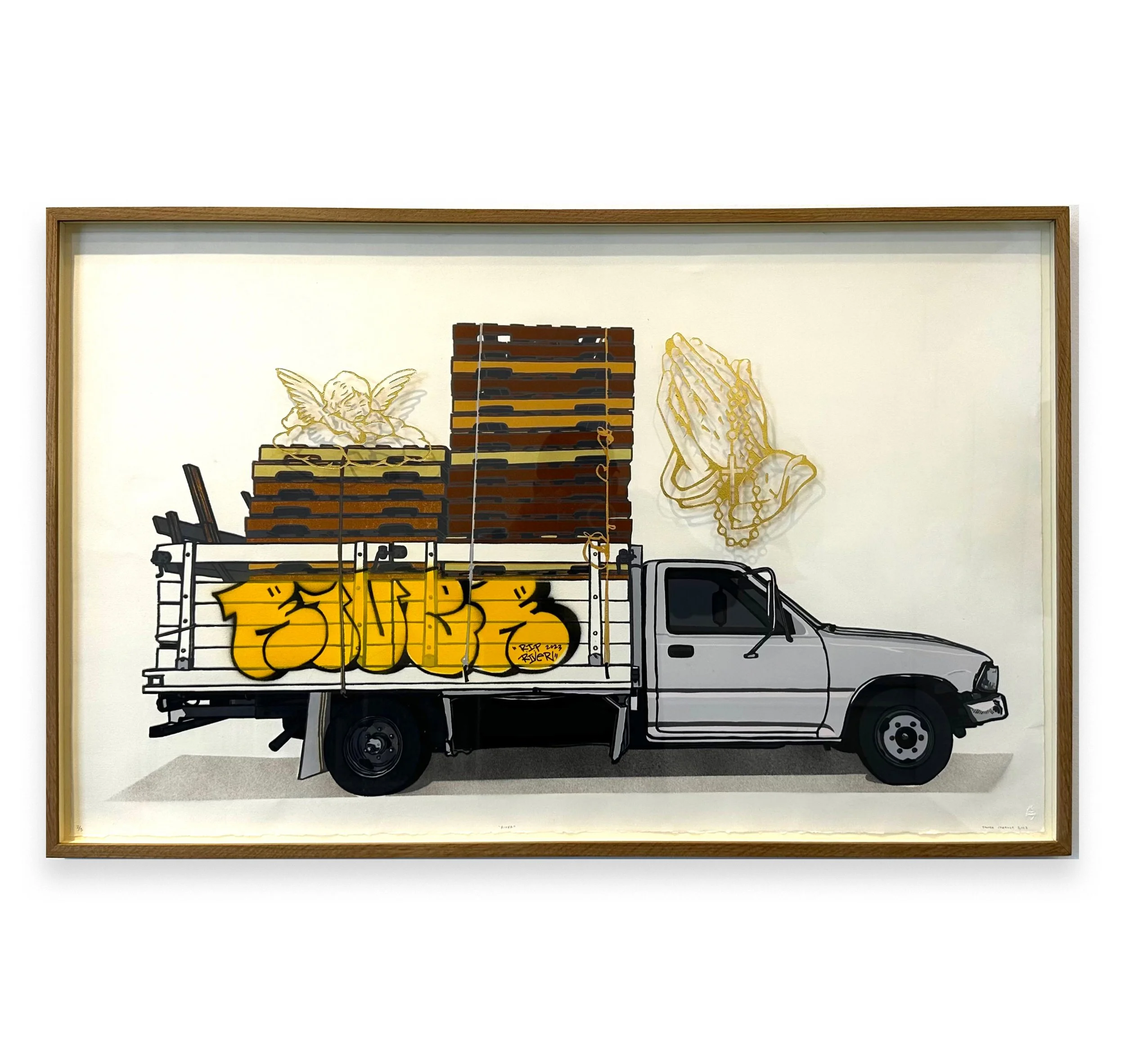
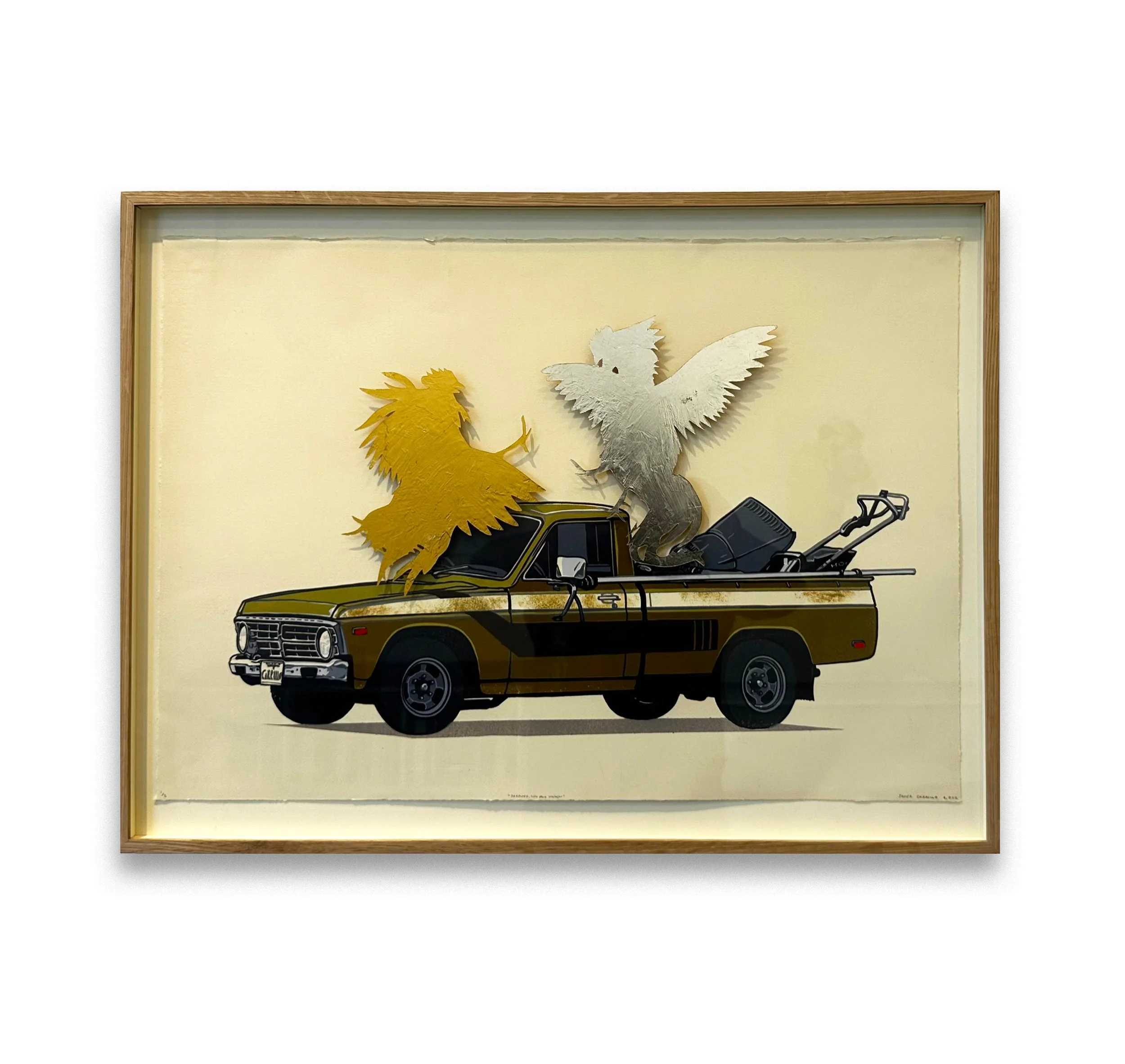
Javier Carrillo, who leads the printmaking program at Art Division in Los Angeles, paints the work trucks of immigrant laborers, piled high with mattresses, tools, ladders, and the materials of a day’s work. Carrillo sees these overloaded vehicles as modern-day beasts of burden, carrying the weight of the labor that builds and sustains Southern California. His paintings render them with both reverence and affection.
Victor Reyes fuses Indigenous cosmology, Chicano culture, and the urban landscape of Los Angeles in phantasmagorical narratives where the past is not erased but transformed. For Reyes, lowriders “function as sacred vessels, chariots, time machines and ceremonial carriers, like ritual masks or secret objects.” Following the legacy of Chicano artists Carlos Almaraz and Gilbert Luján, he creates his own mythic cast of jaguar women, warrior cholos, and hybrid figures who “function as protectors and witnesses of everyday people trying to embody resilience and strength.”
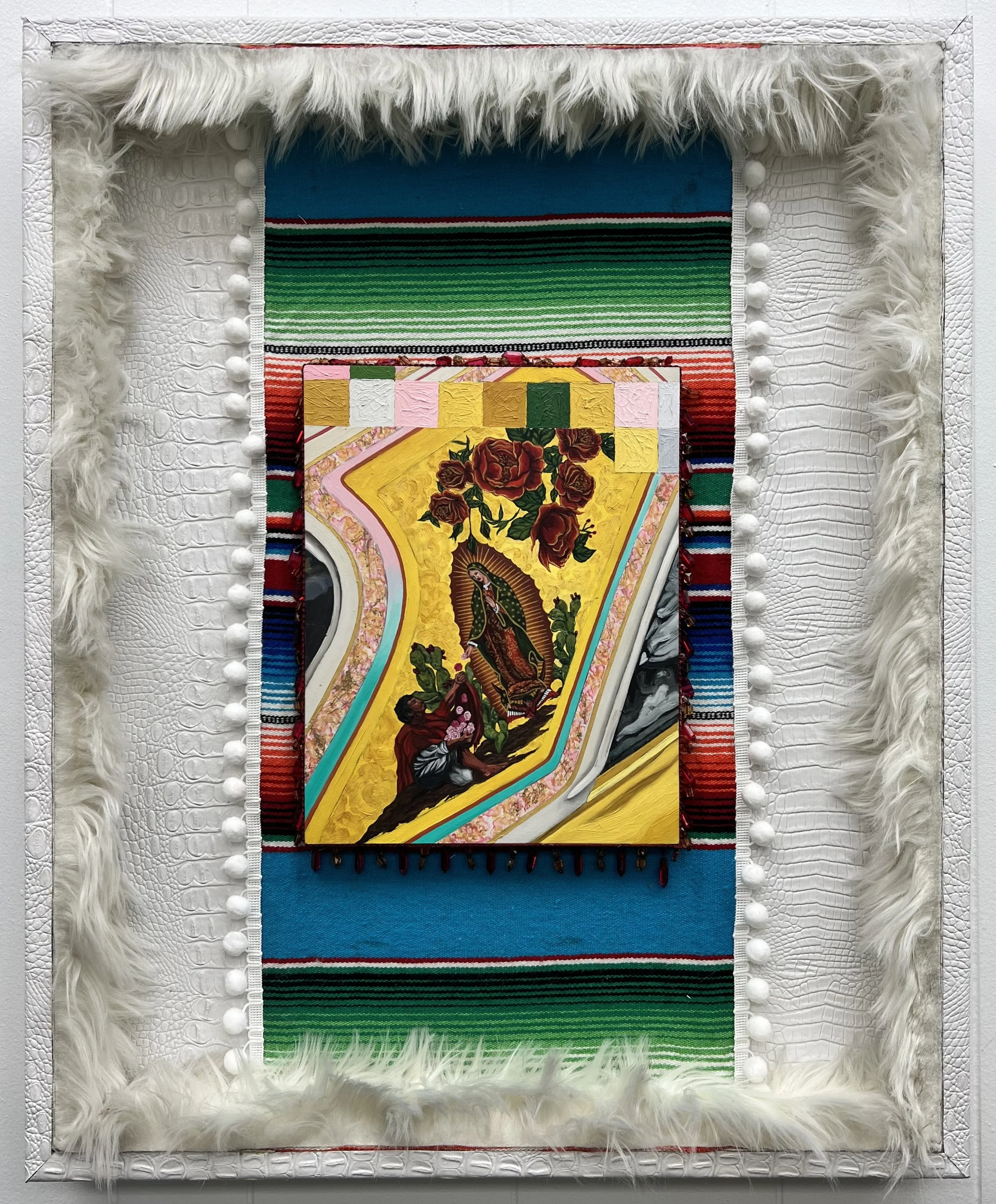
Jacqueline Valenzuela grew up watching lowriders cruise Whittier Boulevard. She sees a kinship between the ornate, bedazzled Catholic church and the lowrider’s extravagant chrome and glittering paint: both embrace flamboyance and are rooted in acts of veneration. Working with auto paint, faux fur, and other materials associated with the custom shop, she creates mixed-media works she considers reliquaries, carrying “histories of labor, family, aspiration and cultural knowledge passed between generations.”